Welded White Membrane
TPO Roofing
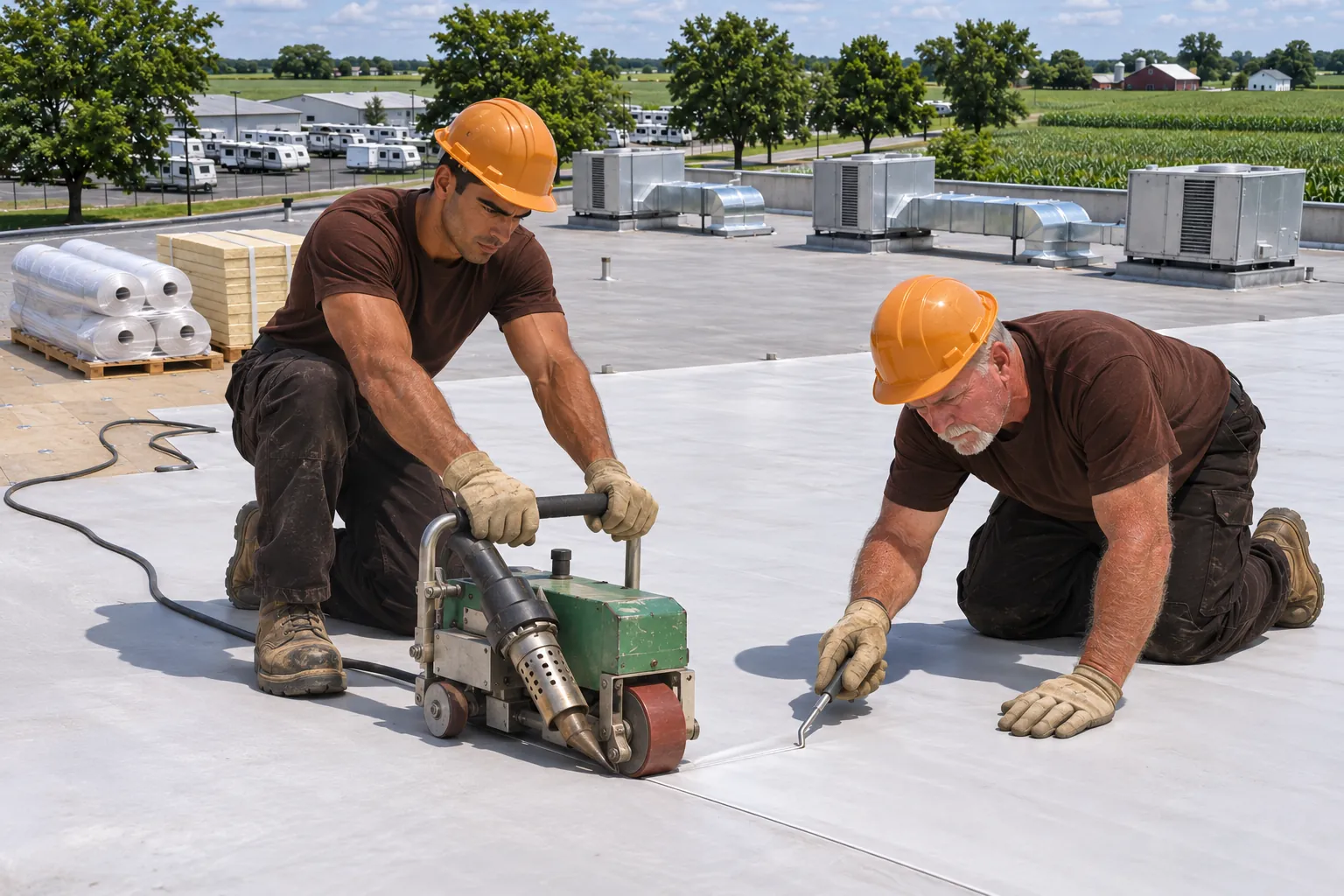
Hot-air welded seams and a white sheet fit long, flat warehouse and retail roofs where summer sun bakes the deck and drains sit out in the field.
TPO Roofing in Elkhart
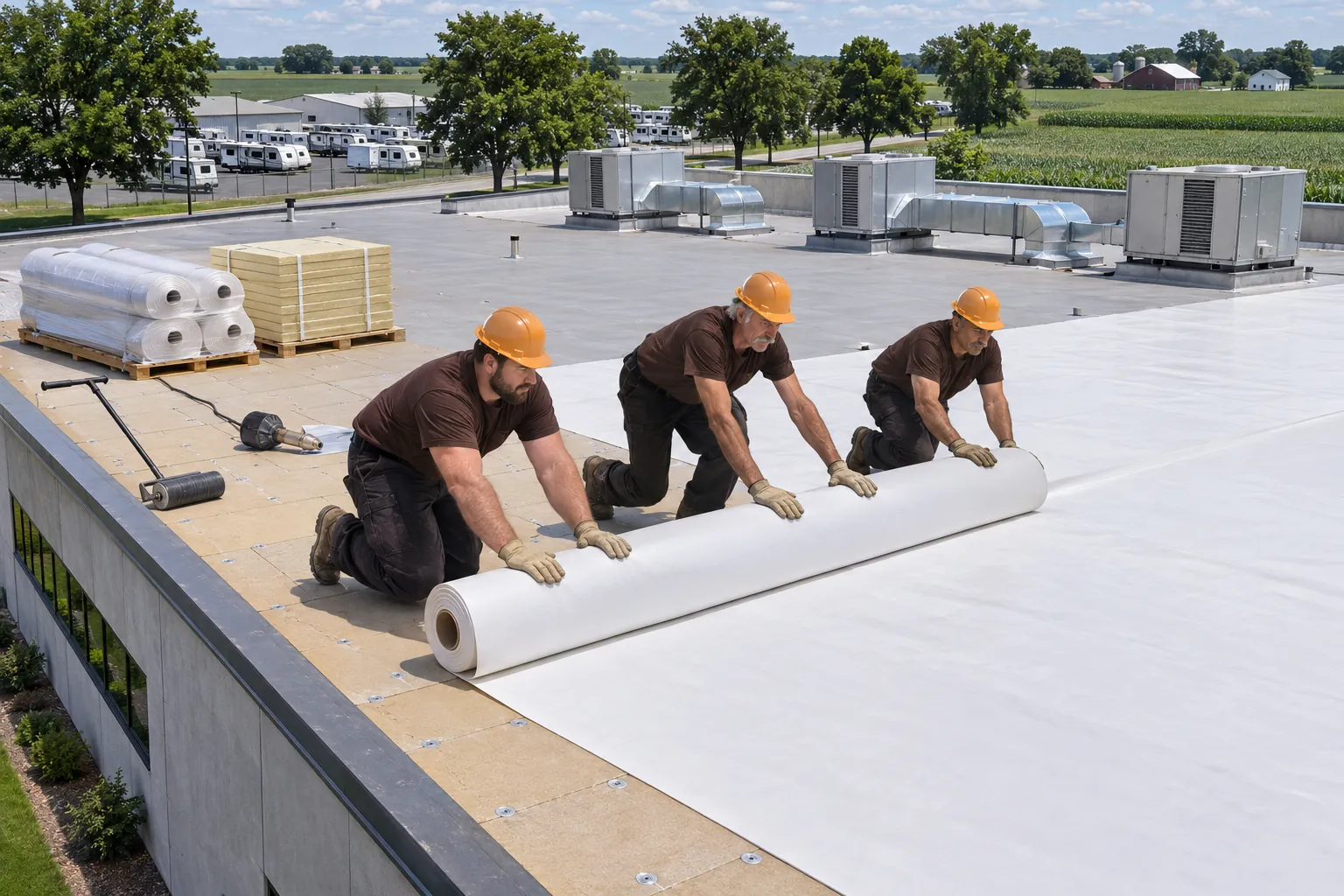
As an Elkhart commercial roofing contractor, we install TPO, EPDM, industrial, and metal roofs on business buildings across Elkhart County.
Elkhart commercial roofing work comes down to four systems. Each row shows the kind of roof where that system earns its place.
Hot-air welded seams and a white sheet fit long, flat warehouse and retail roofs where summer sun bakes the deck and drains sit out in the field.
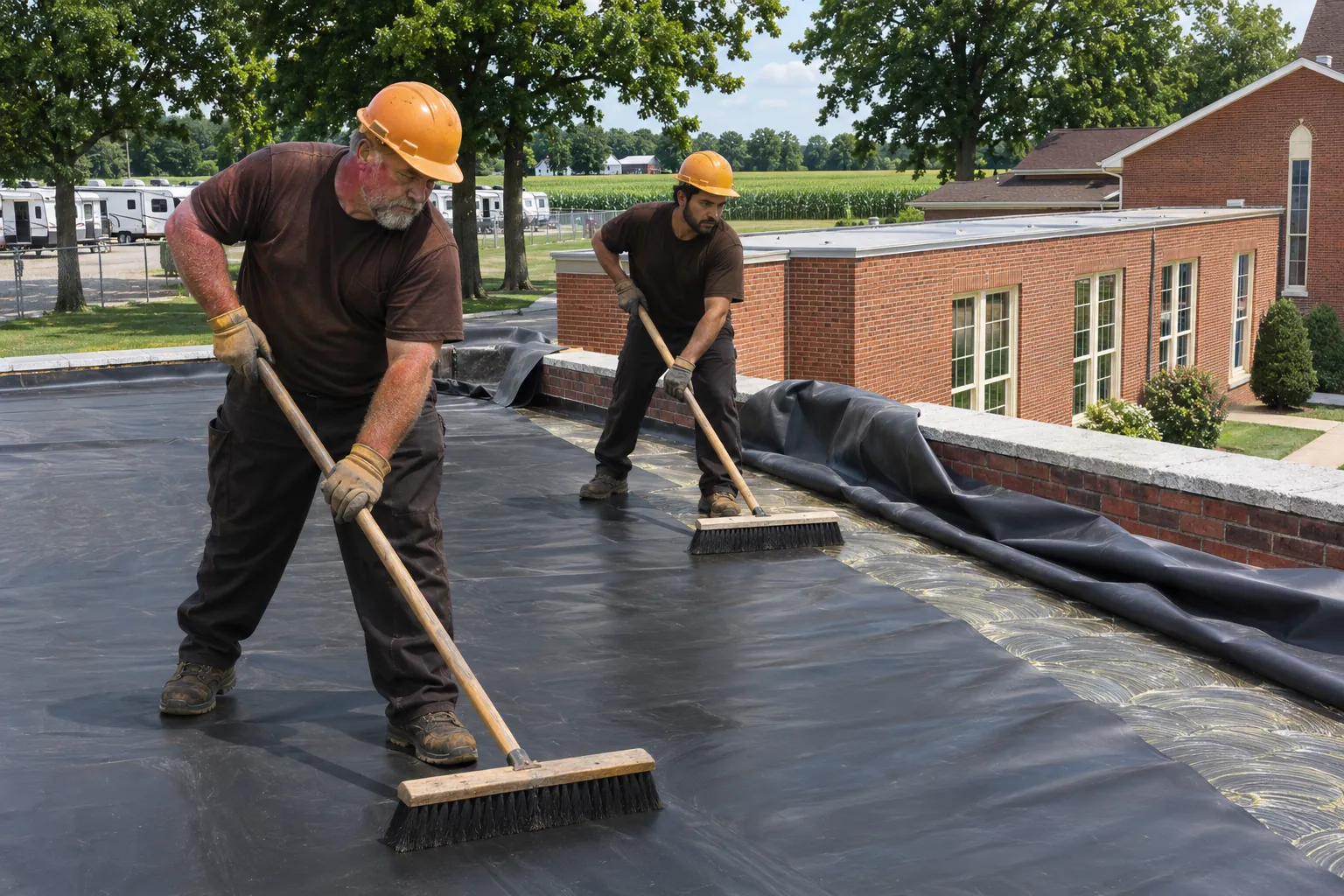
TPO Roofing in ElkhartWide black rubber sheets with taped laps stay flexible through January cold, which is why older plants, schools, and offices here so often carry them.
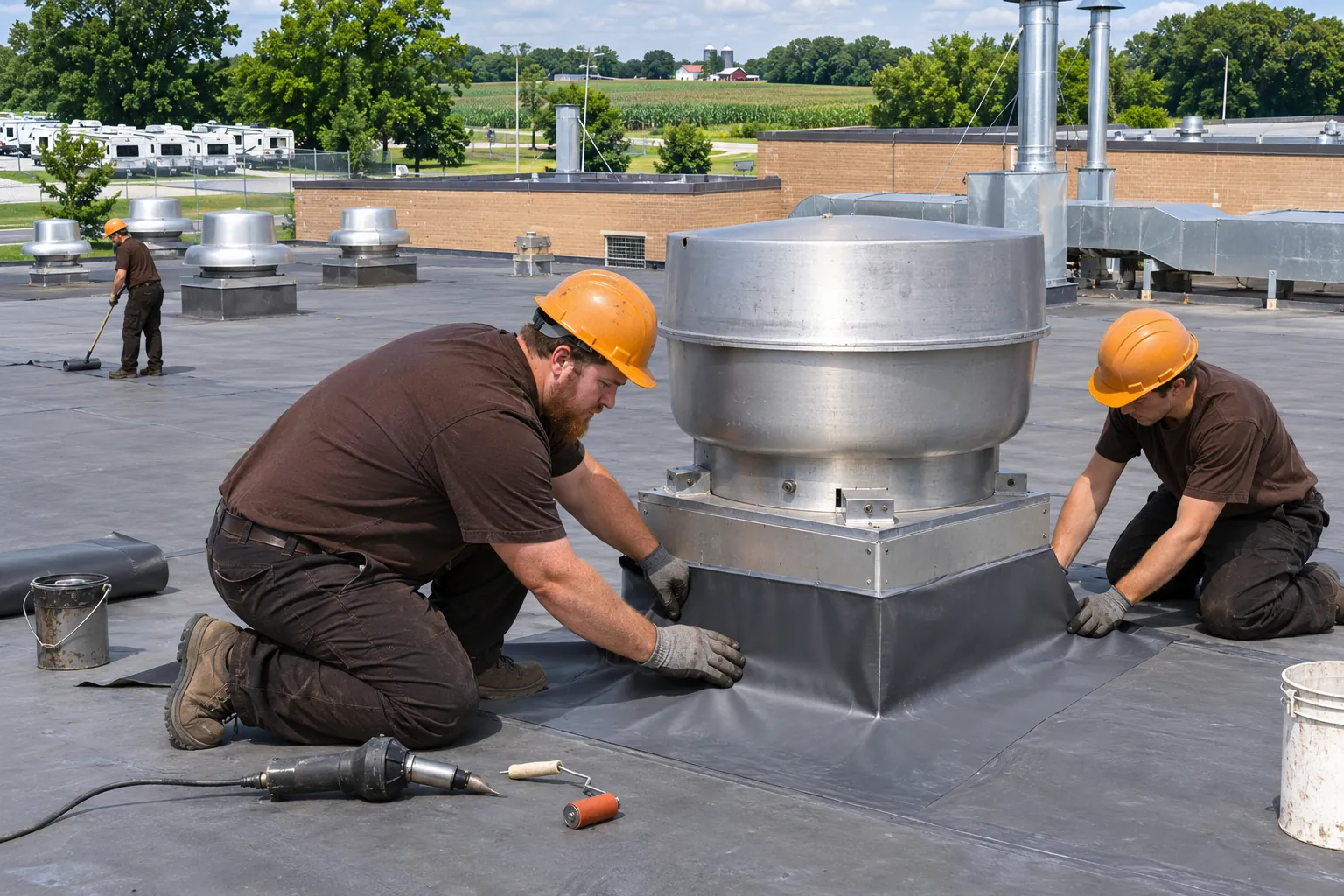
EPDM Roofing in ElkhartStacks, exhaust fans, and heavy curbs crowd a plant roof, so the membrane, walkway pads, and flashing are picked around what the building vents.
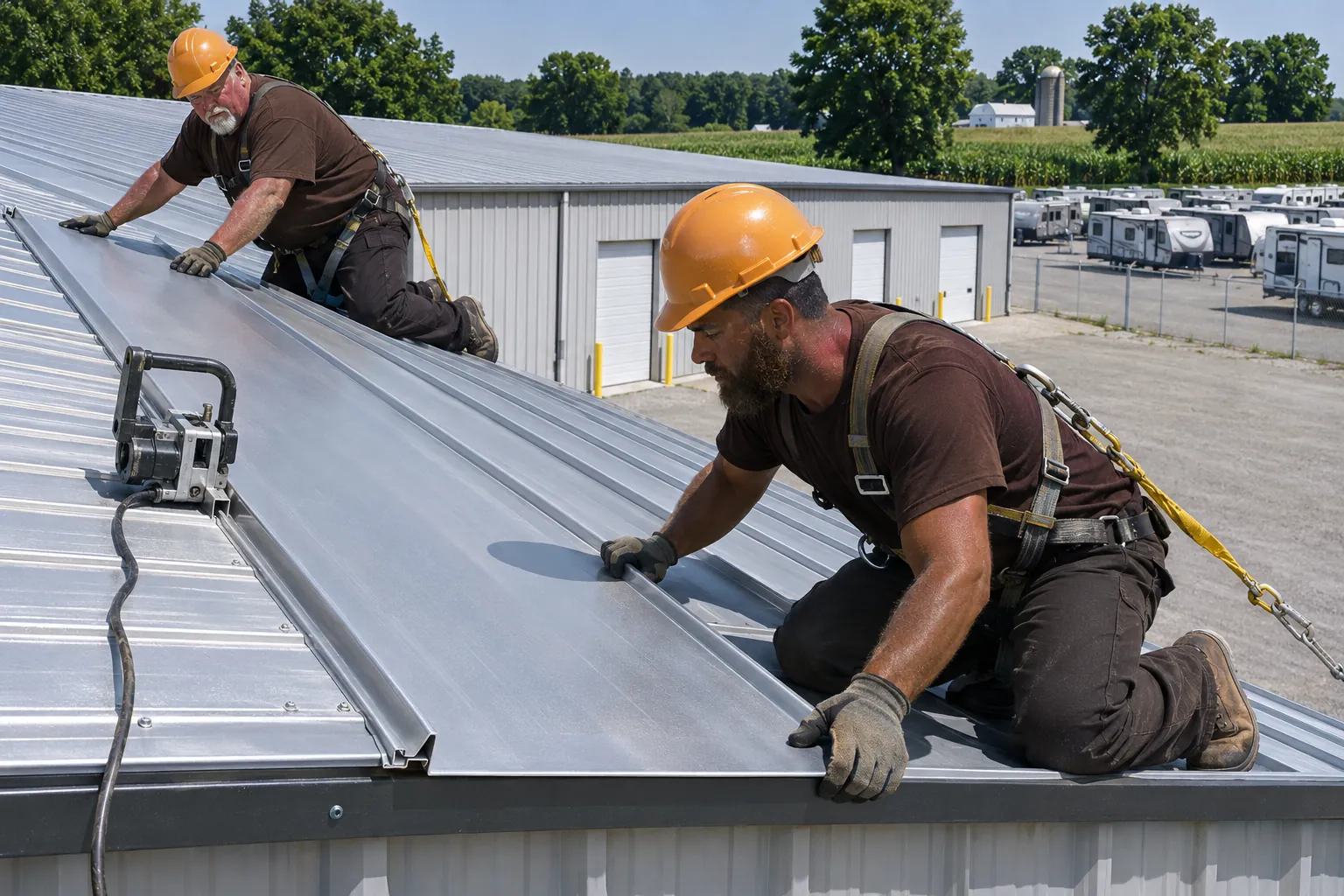
Industrial Roofing in ElkhartMetal panels shed lake-effect snow, and on retrofit framing they can go over a tired flat roof while adding slope toward the eaves.
Commercial Metal Roofing in ElkhartMost leaks start in one of five places. On a roof walk we check each zone and write down what we find before anyone talks about price.
Coping caps loosen, and the membrane pulls back from the wall at inside corners. Snow drifts against parapets each winter, so the base flashing there takes more meltwater than anywhere else on the roof.
Glued EPDM laps open as old adhesive dries out, and TPO welds can split where foot traffic flexes the sheet. A probe along each seam finds the soft spots a quick look misses.
Leaves and gravel choke the strainer, water rings form around the drain bowl, and ice holds meltwater on the roof. Clamping rings that slipped let water run under the membrane.
Rooftop unit curbs, exhaust fans, pipe boots, and gas lines all cut through the roof. Cracked pitch pans and split boots at these openings cause many of the ceiling stains we trace.
Wet insulation stays hidden under a dry-looking membrane until the deck rusts or the boards crush underfoot. Core cuts and a moisture meter show how far the water has spread.
Three roof types cover most low-slope and pitched commercial work in the county. These rows compare what an owner sees and feels day to day.
| Compare | TPO | EPDM | Commercial Metal |
|---|---|---|---|
| Seams | Hot-air welded into one sheet | Primer and seam tape on wide laps | Standing seams or lapped, fastened panels |
| Surface | White, reflects summer sun | Black rubber, flexible in cold | Painted steel in many colors |
| Roof slope | Flat and low slope | Flat and low slope | Pitched, or flat with retrofit framing |
| Common here on | Warehouses, retail strips, light industrial | Older plants, schools, offices | Shops, pole buildings, newer RV plants |
| Over the old roof | Possible when the old roof is dry | Possible when the old roof is dry | Framed over a flat roof in a retrofit |
Tell us where the stain or drip shows up inside. We walk the roof above it, find the seam, curb, or drain letting water in, and lay out the fix.
Or call (574) 384-0850
Four steps, in the same order on every building, from the first roof walk to the last piece of edge metal.
We walk every section, take core cuts to read the layers, and run a moisture meter across the field so wet insulation shows up before a price does.
You get the membrane or panel, insulation thickness, fastening pattern, flashing details, and edge metal in writing, along with the permit check for your address.
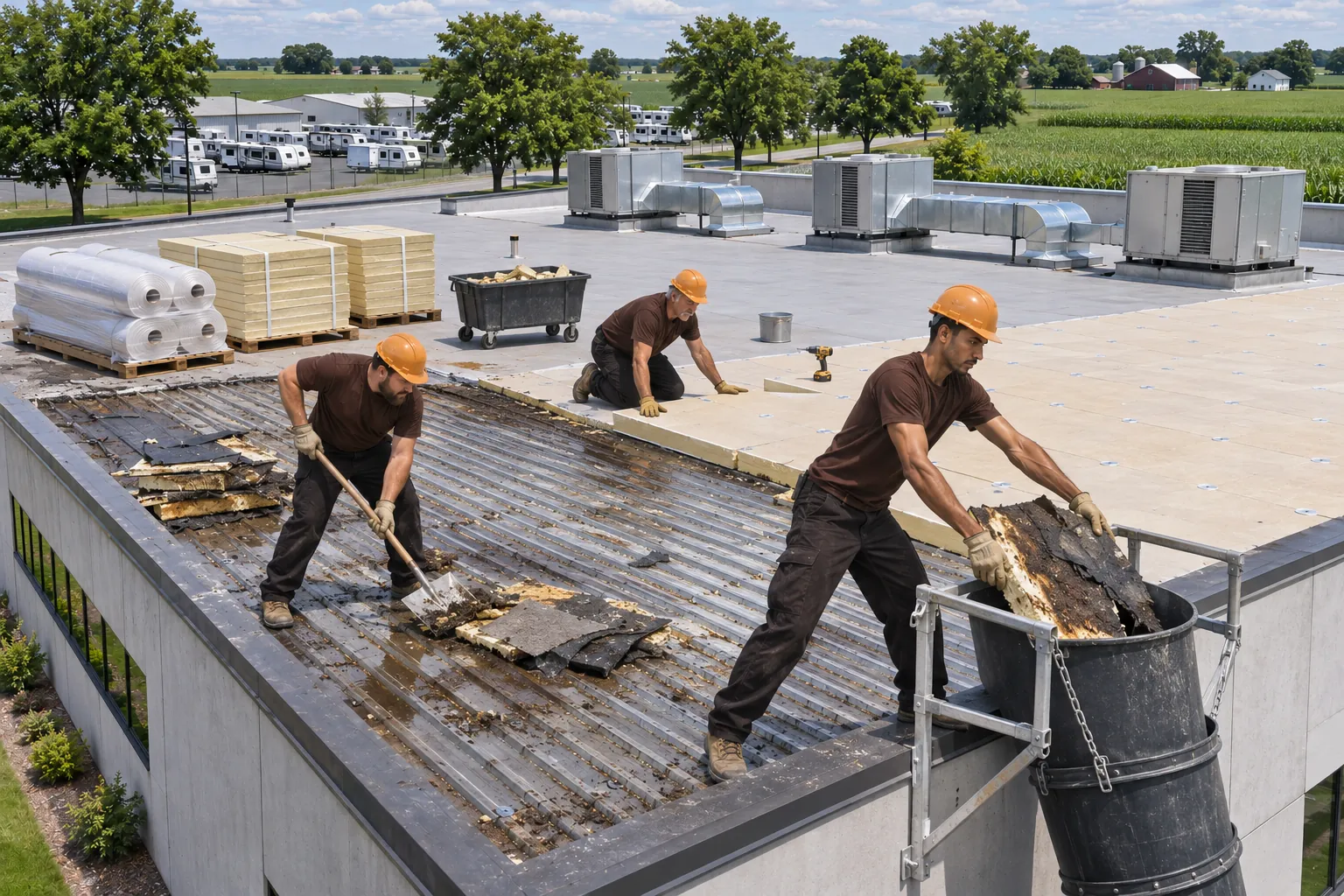
Dumpster spots, crane days, and dock access are set with your shift times, and tear-off moves one section at a time so the deck is covered each night.
Curbs, drains, and parapets get flashed last, seams are probed end to end, and we walk the finished roof with you before the crew leaves.
A replacement fixes more than the leak you called about. Here is what owners describe before the work and what the new roof brings.
We take roofing work in Elkhart and five towns nearby. Outside them? Call us or send us a message.
Home base: RV plants, instrument shops, warehouses, and offices.
Lots with several buildings, each roof priced on its own.
Manufacturing roofs replaced over clean, running production areas.
Older flat roofs converted to sloped metal on framing.
Warehouses and offices cored for wet insulation before bids.
Industrial roofs with pads along every equipment service path.
Any roof over a business, plant, school, church, or public building counts. In Elkhart that usually means a low-slope TPO or EPDM membrane or a metal panel roof. These roofs cover more area, sit flatter, and carry rooftop units, drains, and stacks, so drainage, insulation, and commercial code rules all shape the job.
Published ranges put TPO and EPDM at roughly 20 to 30 years, and a cared-for metal roof runs longer. What shortens that span is easy to spot: water sitting in the field, boot paths worn to rooftop units, freeze cycles, and flashings left to split. A spring and fall roof walk catches those early.
Yes, for many jobs. Mechanically fastened TPO, EPDM, and metal panels go down on a deck that is dry and cleared of snow and ice. Adhesives, primers, and sealants carry minimum temperatures, so those steps shift to milder days or use cold-weather products, and lake-effect snow keeps winter dates flexible.
Pick one that roofs commercial systems every week, carries the insurance your lease or lender asks for, and hands you a written scope naming the membrane, insulation, fastening, and flashing. We install TPO, EPDM, industrial, and metal roofs in Elkhart, Goshen, Warsaw, Kendallville, Columbia City, and Angola.
The City of Elkhart Permit Center takes building permit applications, and roofing is one of the stages its building inspections cover. Before a crew starts, we check with the Permit Center on whether your job needs a permit and which inspections follow. Buildings outside city limits go through their own county or town office.
Send the address and what the roof is doing. We set up a roof walk, take core cuts, and write the scope.