Around Drains
Water runs to drains under the membrane as well as on top. Insulation in a ring around each drain is often the wettest on the roof. Those boards are cut out and replaced before any new membrane goes down.

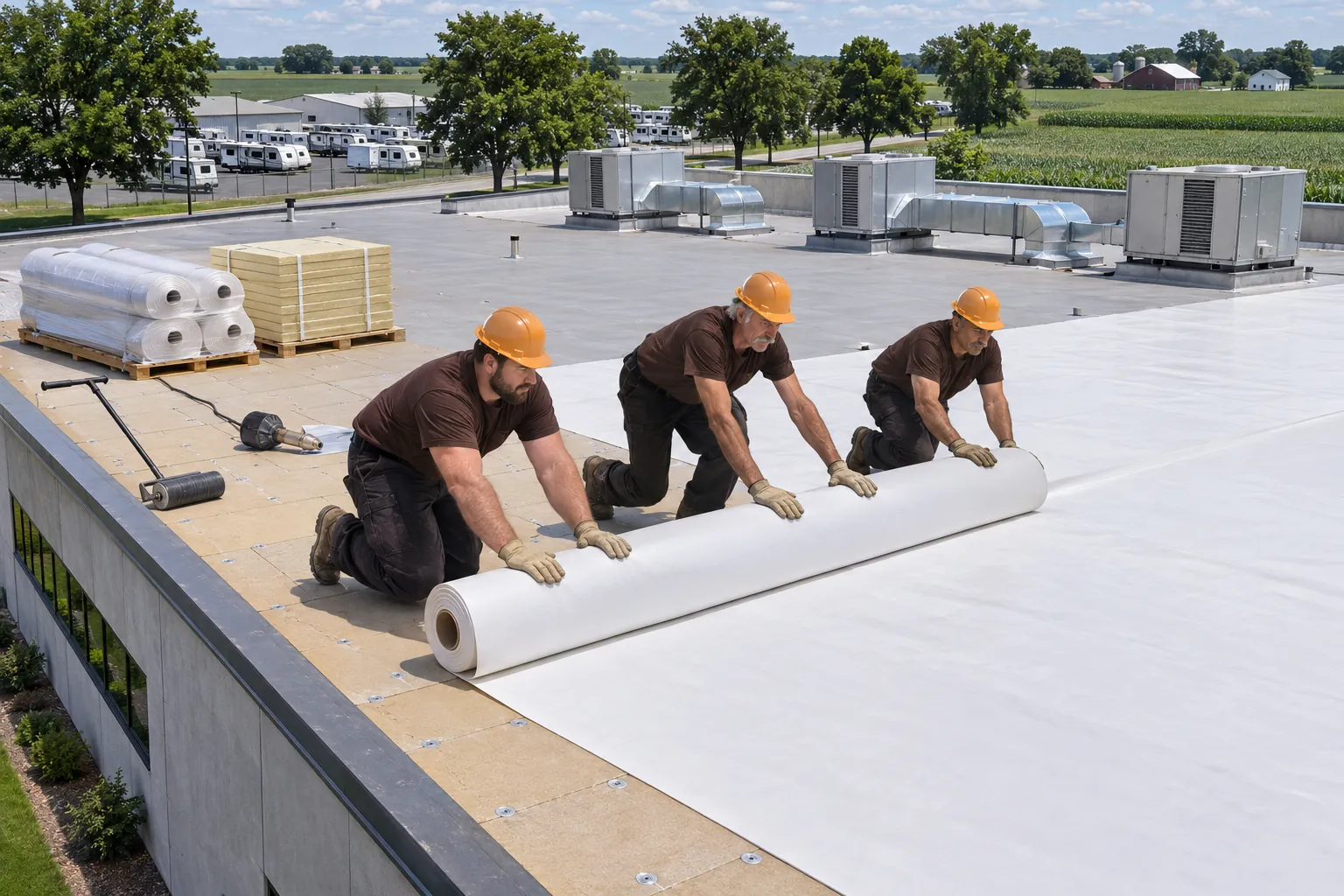
Columbia City commercial roofing starts with core cuts and moisture readings, because wet insulation decides between a recover and a tear-off.
Columbia City commercial roofing bids from us follow a moisture survey of the whole roof, with meter readings and cores behind every line.
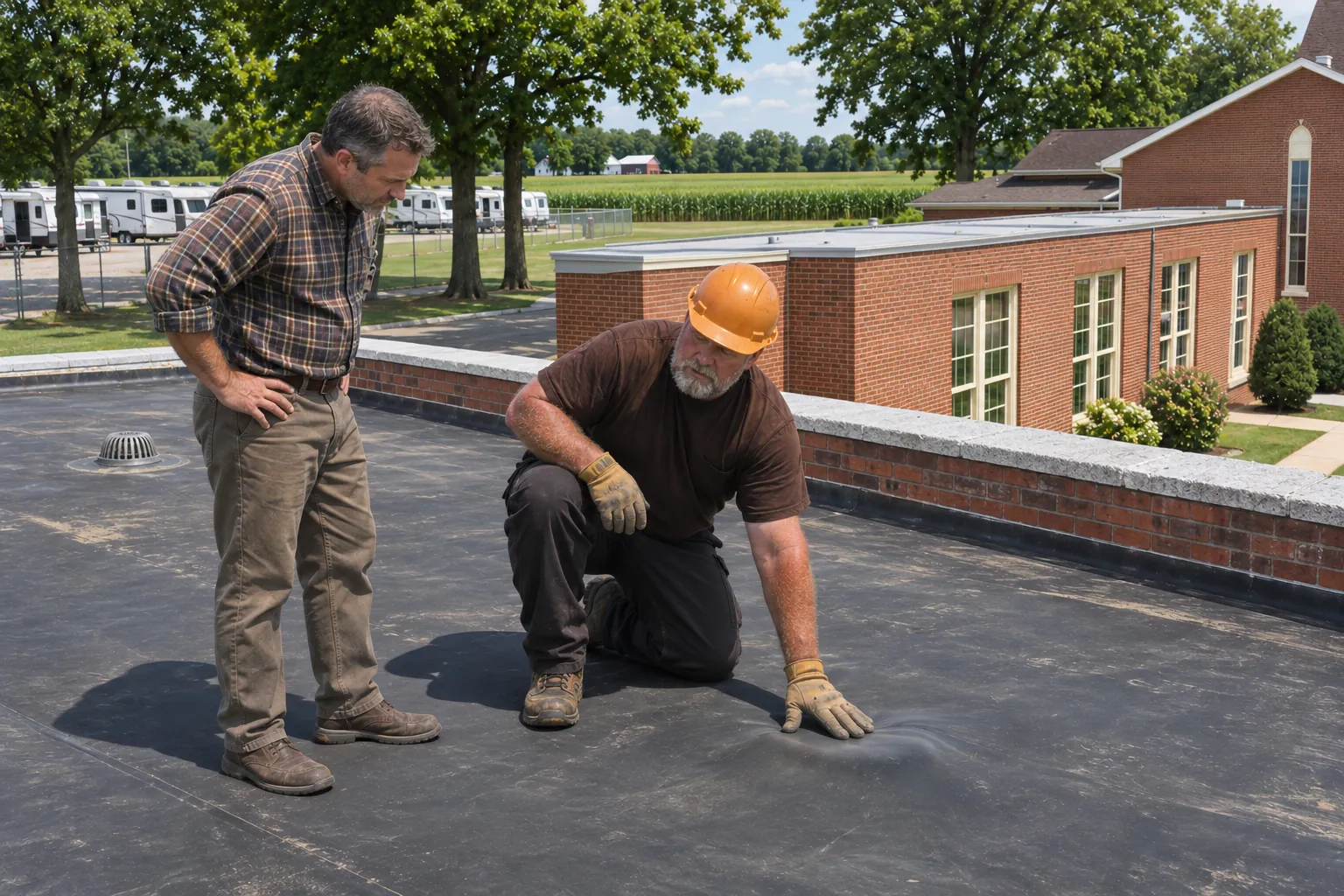
A dry-looking membrane can sit over boards that hold water like a sponge. We run a moisture meter across the field and take core cuts at the wettest readings and at drains and walls.
The results go on a roof plan. If the wet areas are small, they are cut out and a recover fits; if water has spread, the roof comes off to the deck.
Water under a membrane collects in predictable places. These five get cored first.
Water runs to drains under the membrane as well as on top. Insulation in a ring around each drain is often the wettest on the roof. Those boards are cut out and replaced before any new membrane goes down.
Failed base flashing lets water into the boards along each parapet, where it spreads inward without a visible stain. Cores at the wall base show how far it has traveled.
Old curb flashing leaks into the insulation under rooftop units, hidden by the unit itself. Curb flashing comes off so the boards under the unit can be checked.
Rusted edge metal and loose gutters let wind-driven rain behind the membrane at the perimeter. New edge metal and gutters stop that path at the perimeter.
Stains inside mark where water finally came through. The wet area above is usually larger than the stain. We mark each stain on the roof plan and core above it.
Owners see the difference in the scope before they see it on the roof.
After the survey, the system is picked from the deck, drainage, and building use.
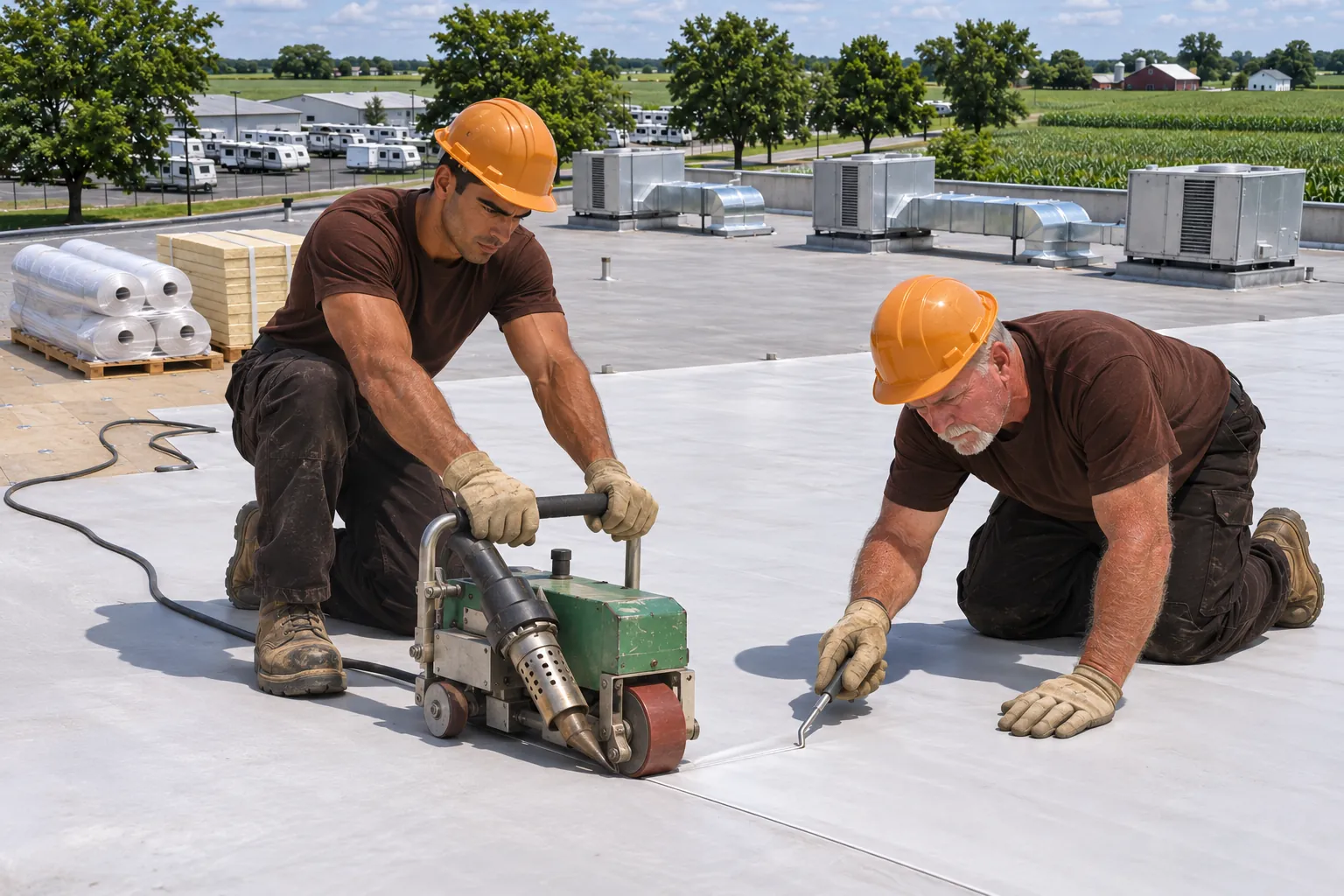
Warehouses with wide flat fields and dry decks often get welded TPO over new or recovered insulation.
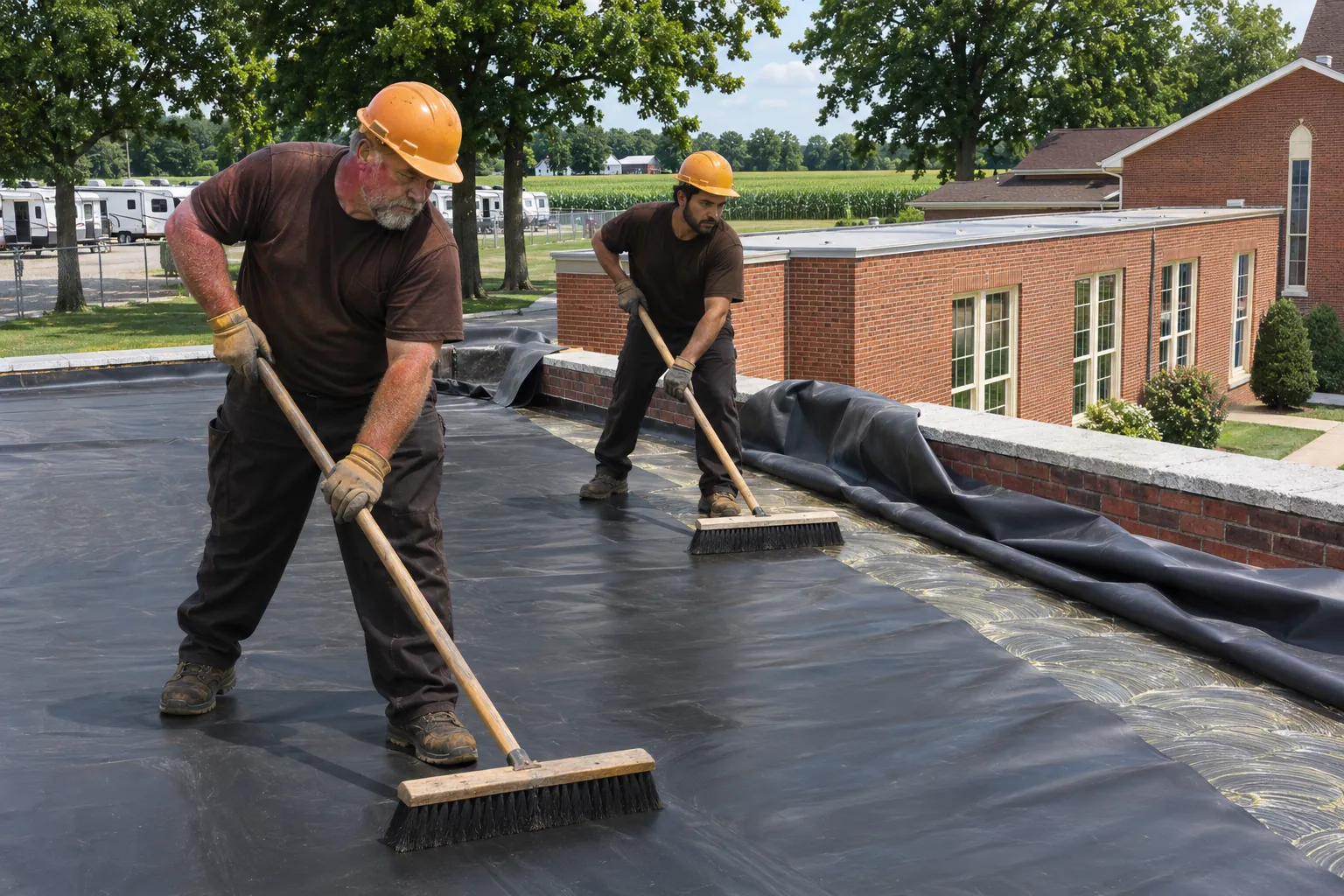
TPO Roofing detailsOffices with parapets and an existing rubber roof can stay in EPDM once wet boards are replaced.
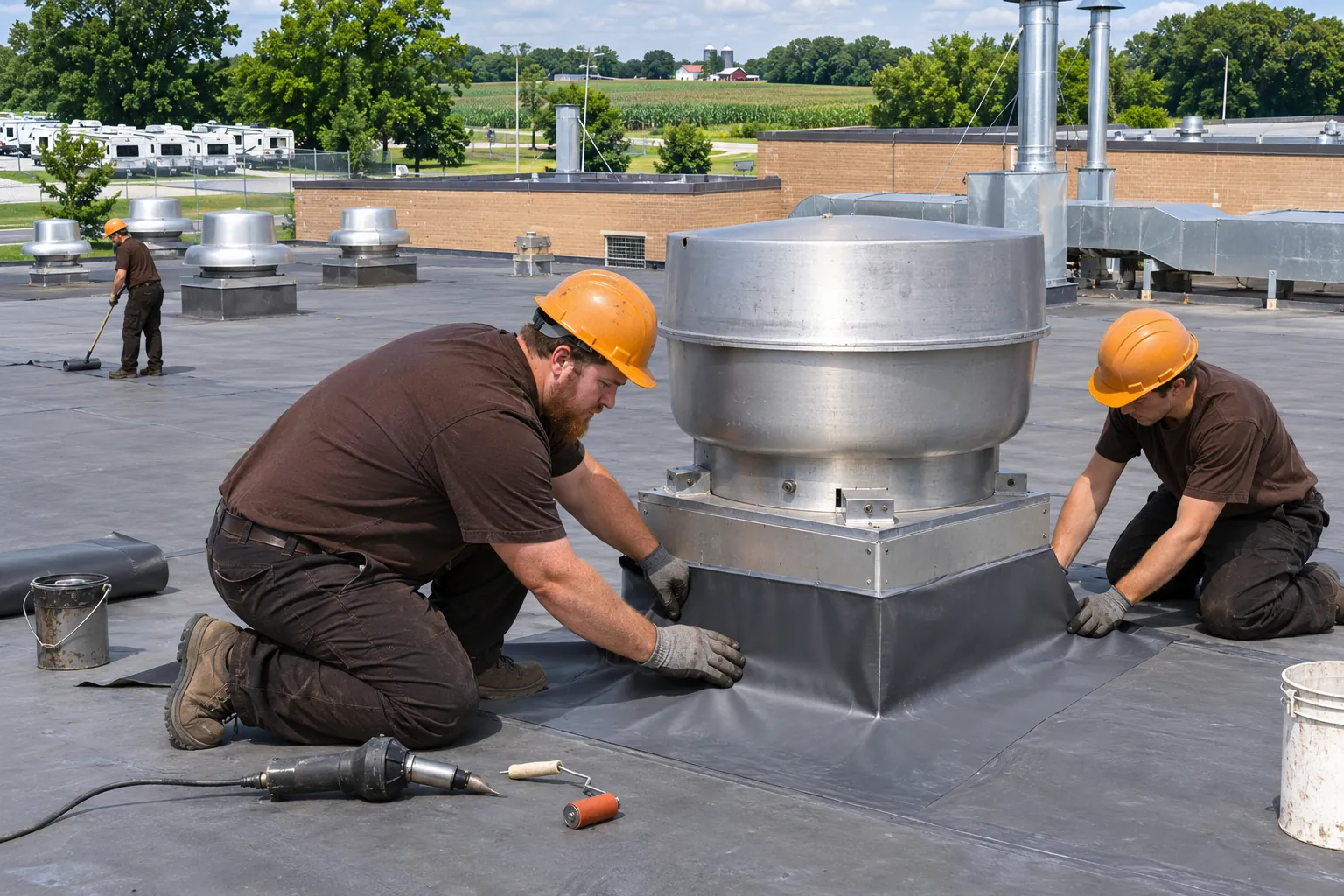
EPDM Roofing detailsIndustrial buildings with stacks and fans get the survey plus walkway pads and stack flashing.
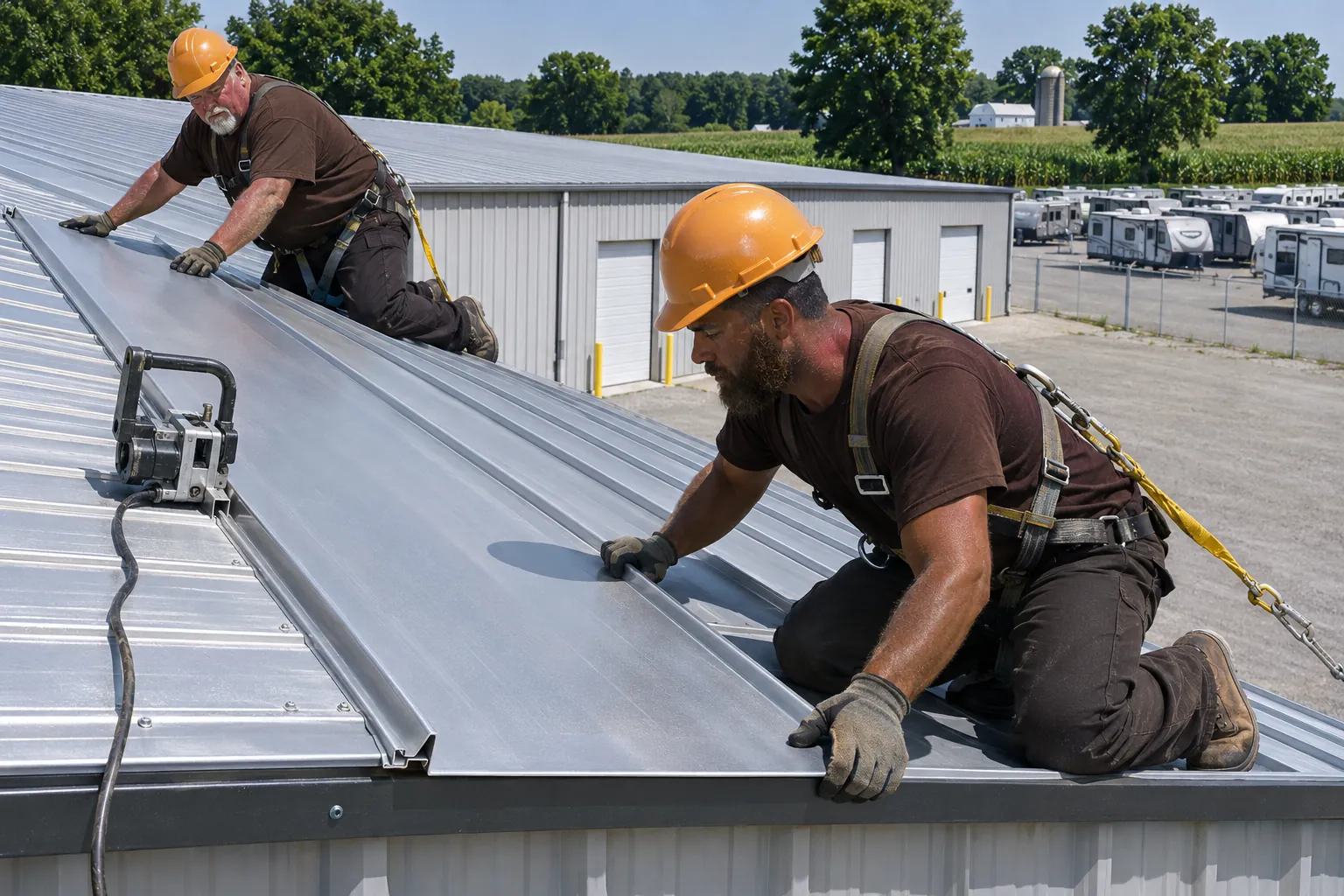
Industrial Roofing detailsPitched shops or flat roofs that keep ponding can move to metal panels on framing.
Commercial Metal Roofing details
That usually means wet insulation. We meter and core the roof and mark where the water sits.
Or call (574) 384-0850
Four steps from the first meter reading to the new edge metal.
A moisture meter runs across the whole roof on a grid, and readings are marked on a roof plan. Every reading is logged with its grid spot.
Cores at the high readings, drains, and walls show the layers and how wet each one is. Each core hole is patched and sealed that visit.
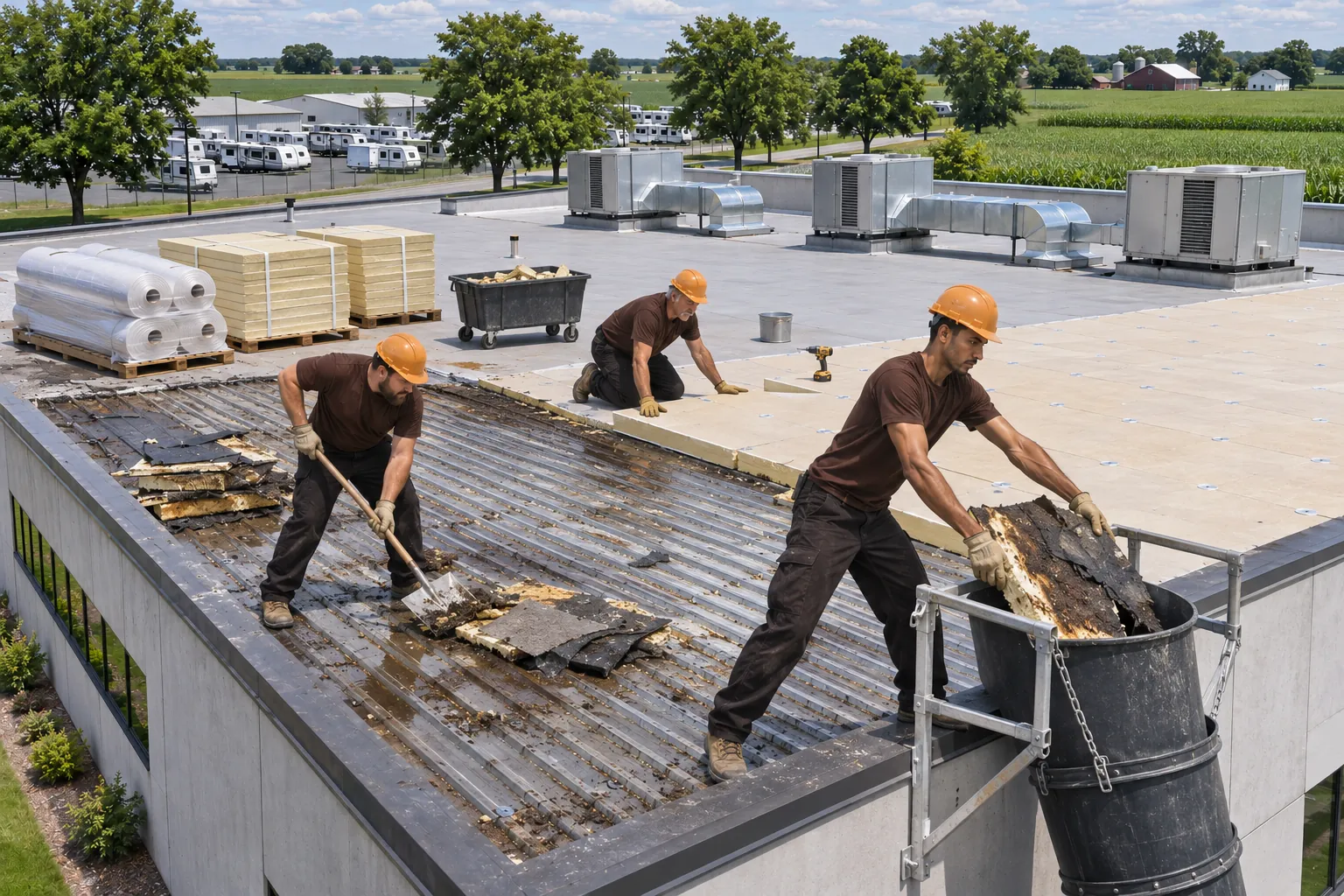
Small wet areas are cut out for a recover, and wide ones mean the roof comes off to the deck. The scope shows the roof plan behind the choice.
The new TPO, EPDM, or metal roof goes on, with new edge metal and flashing at every wall. Drains are reset with new clamping rings.
You get the marked moisture plan, core results, and the as-built roof details, so the next survey starts with a baseline. The next survey can compare against it.
We roof in Columbia City and five other towns. Not on the list? Call us or send us a message.
Home base: RV plants, instrument shops, warehouses, and offices.
Lots with several buildings, each roof priced on its own.
Manufacturing roofs replaced over clean, running production areas.
Older flat roofs converted to sloped metal on framing.
Industrial roofs with pads along every equipment service path.
Yes, on warehouses, offices, and industrial buildings in Columbia City. We inspect the roof, check for wet insulation, and recommend TPO, EPDM, or metal from the deck, drainage, and use of the building. Edge metal and flashings are replaced with the new roof.
A moisture meter on a grid finds the high readings, and core cuts at those spots confirm how wet the boards are. Drains, wall bases, and unit curbs get cores too.
On our reroofs, yes. Old edge metal is often rusted or loose, and reusing it leaves the weakest part of the roof in place at the perimeter.
The survey comes first. Then slope, deck type, rooftop equipment, and what happens in the building narrow it, and the scope explains the choice.
It depends on the roof size and the meter readings. Cores go where readings run high and at drains, walls, and curbs, and every cut is patched and sealed the same visit.
When wet boards cover a small share of the roof, they are cut out and replaced with dry insulation first, and a recover can go over the rest if code allows another layer.
Water travels under the membrane and along deck flutes before it drips, so the stain often sits feet away from the opening. The meter and cores find where it really starts.
Requirements vary by address and by whether the roof is recovered or torn off. We confirm with the building office covering your property before the crew is scheduled.
Send the address and where the stains show up. We meter and core the roof first.