Single-Ply, Welded
TPO Roofing
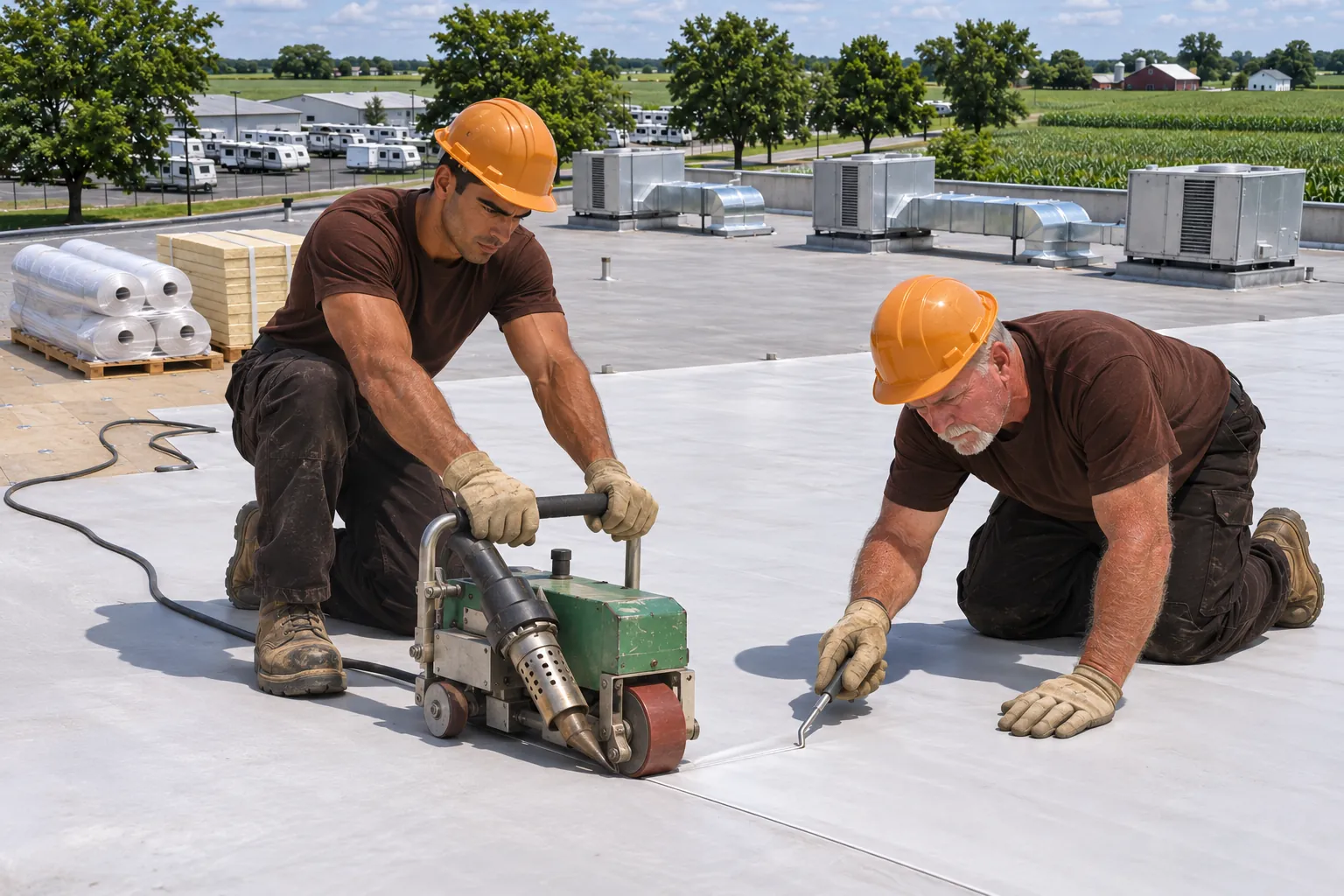
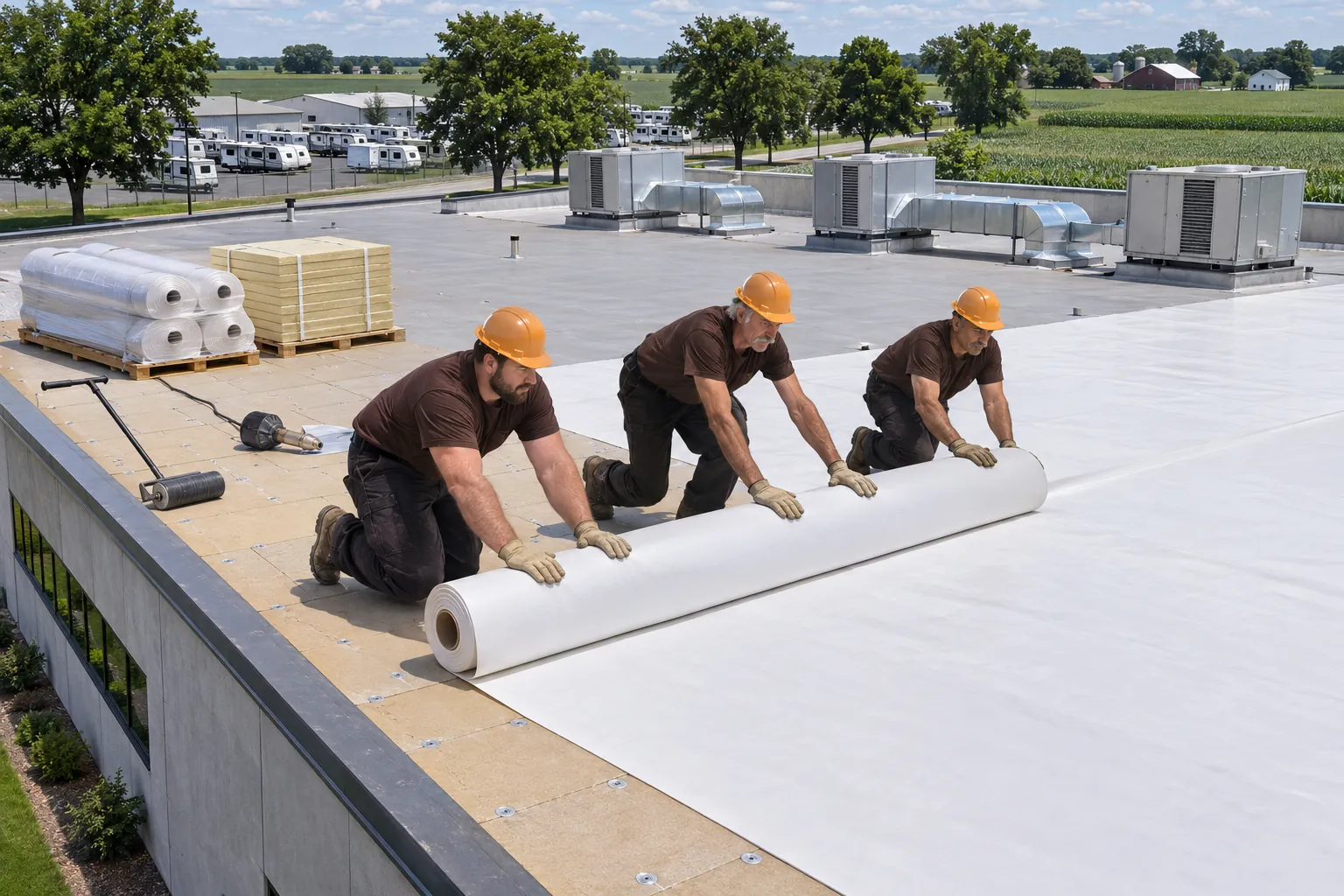
Retail strips, distribution warehouses, and light industrial roofs that want a white surface and welded laps over new insulation boards. Pads go down along service paths.
TPO Roofing details
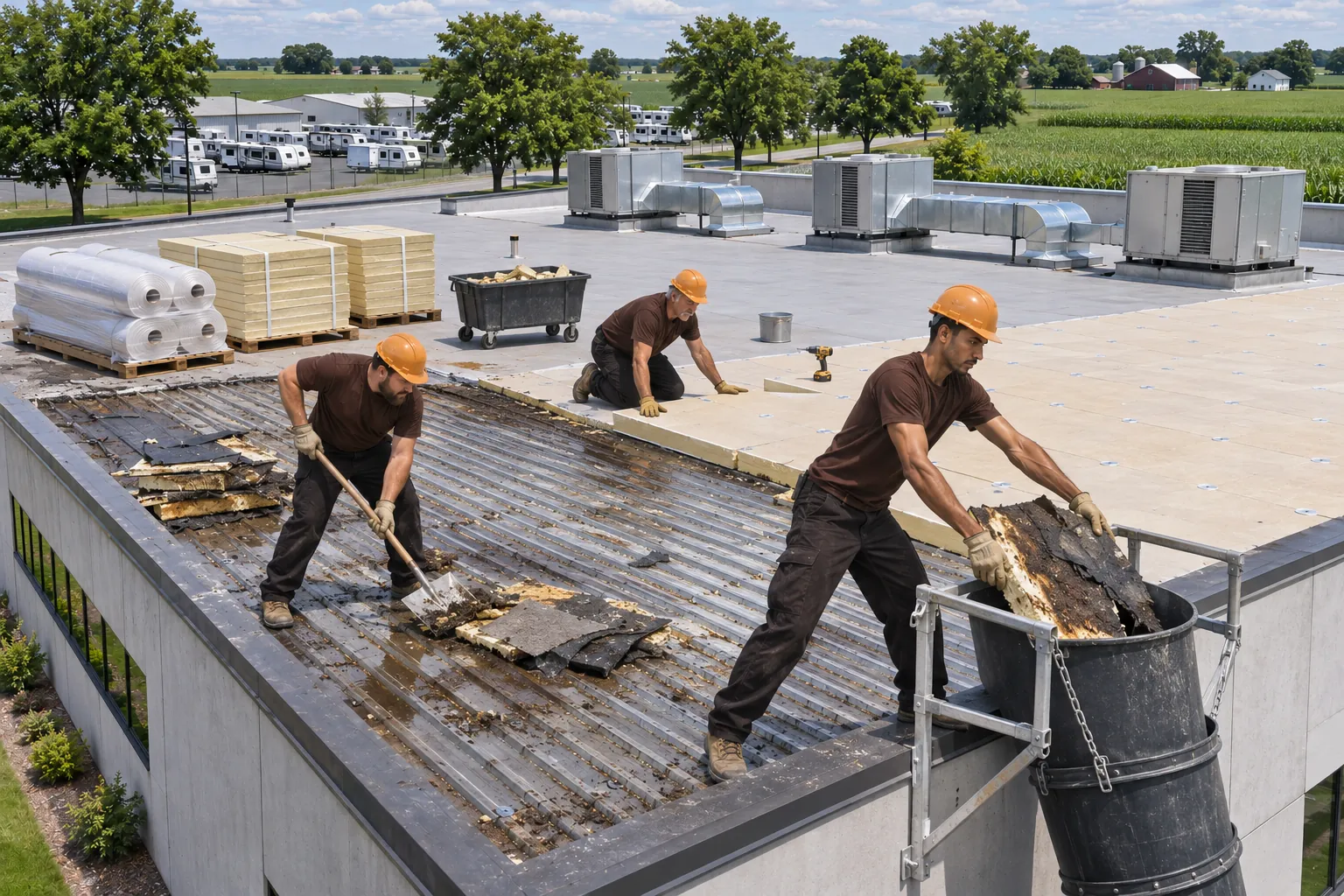
Our commercial roofing services in Elkhart cover TPO, EPDM, industrial, and metal roofs, from a one-building reroof to a full tear-off.
These commercial roofing services in Elkhart each fit a different roof. Start with the row that sounds like your building.
Retail strips, distribution warehouses, and light industrial roofs that want a white surface and welded laps over new insulation boards. Pads go down along service paths.
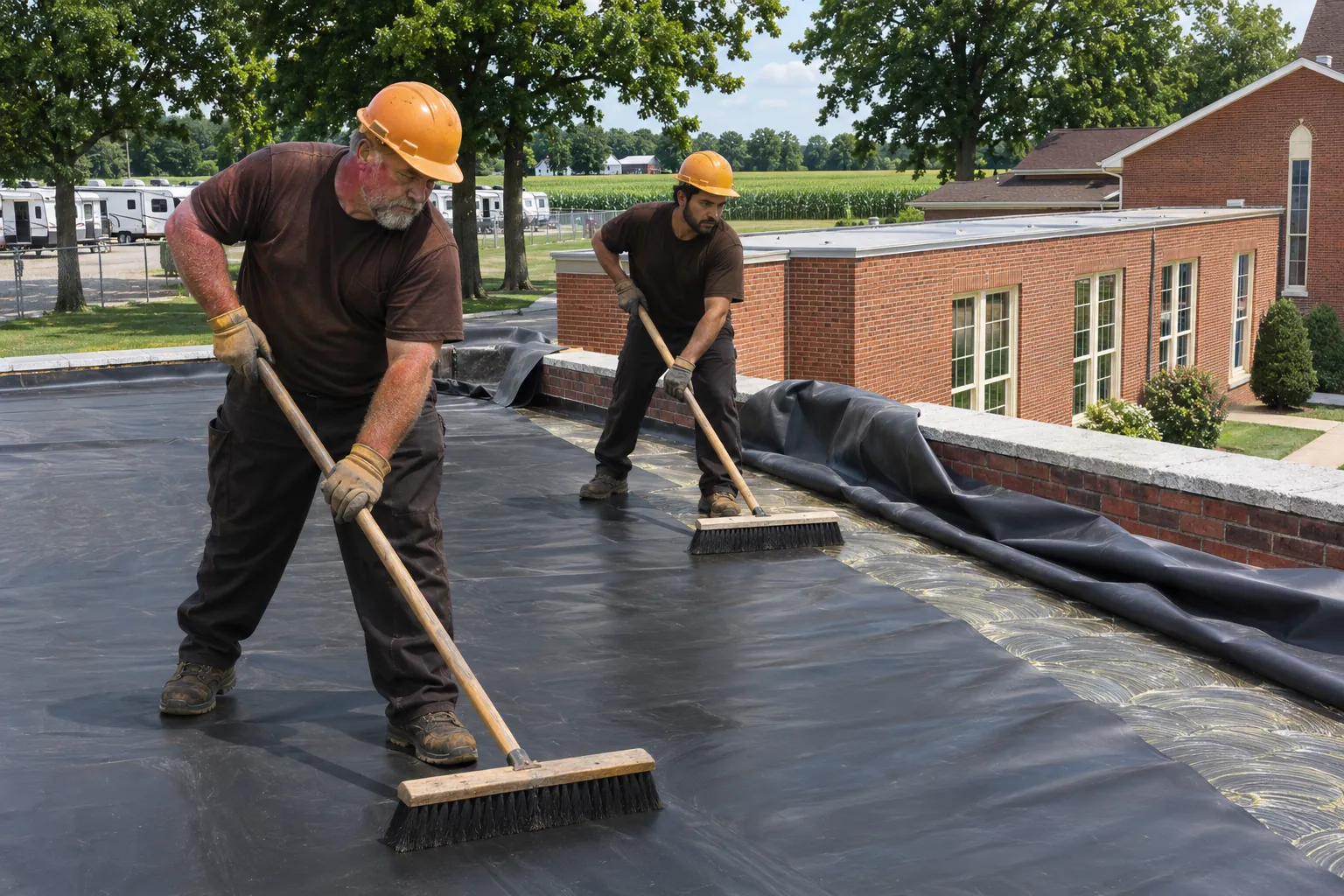
TPO Roofing detailsOlder flat roofs on schools, churches, and offices where a rubber sheet with fewer seams handles cold snaps and parapet walls well. Boots and curbs get new flashing.
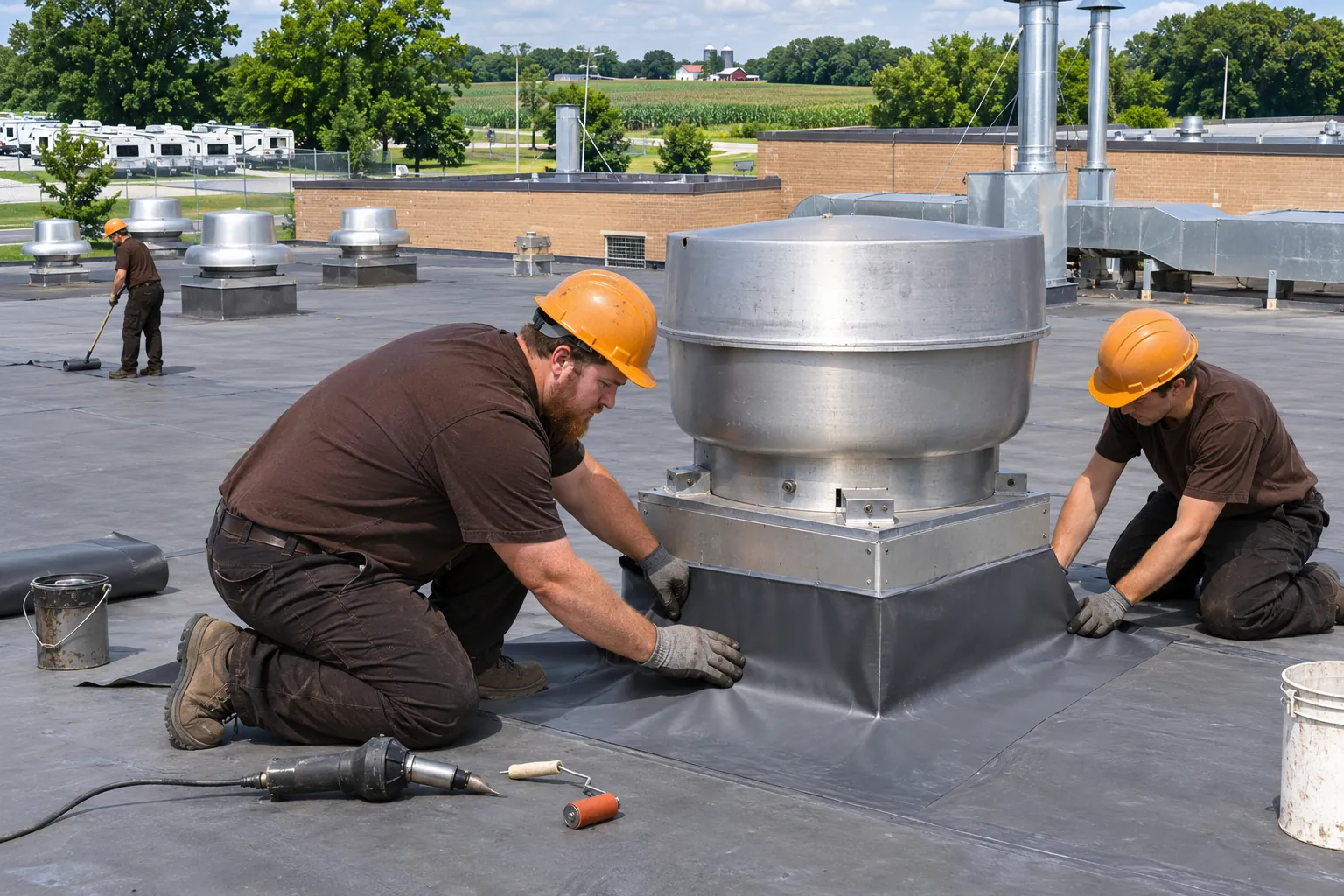
EPDM Roofing detailsRV assembly plants, band instrument shops, and fabrication buildings with stacks and fans, where work runs bay by bay over live lines. Stacks get collars sized to their heat.
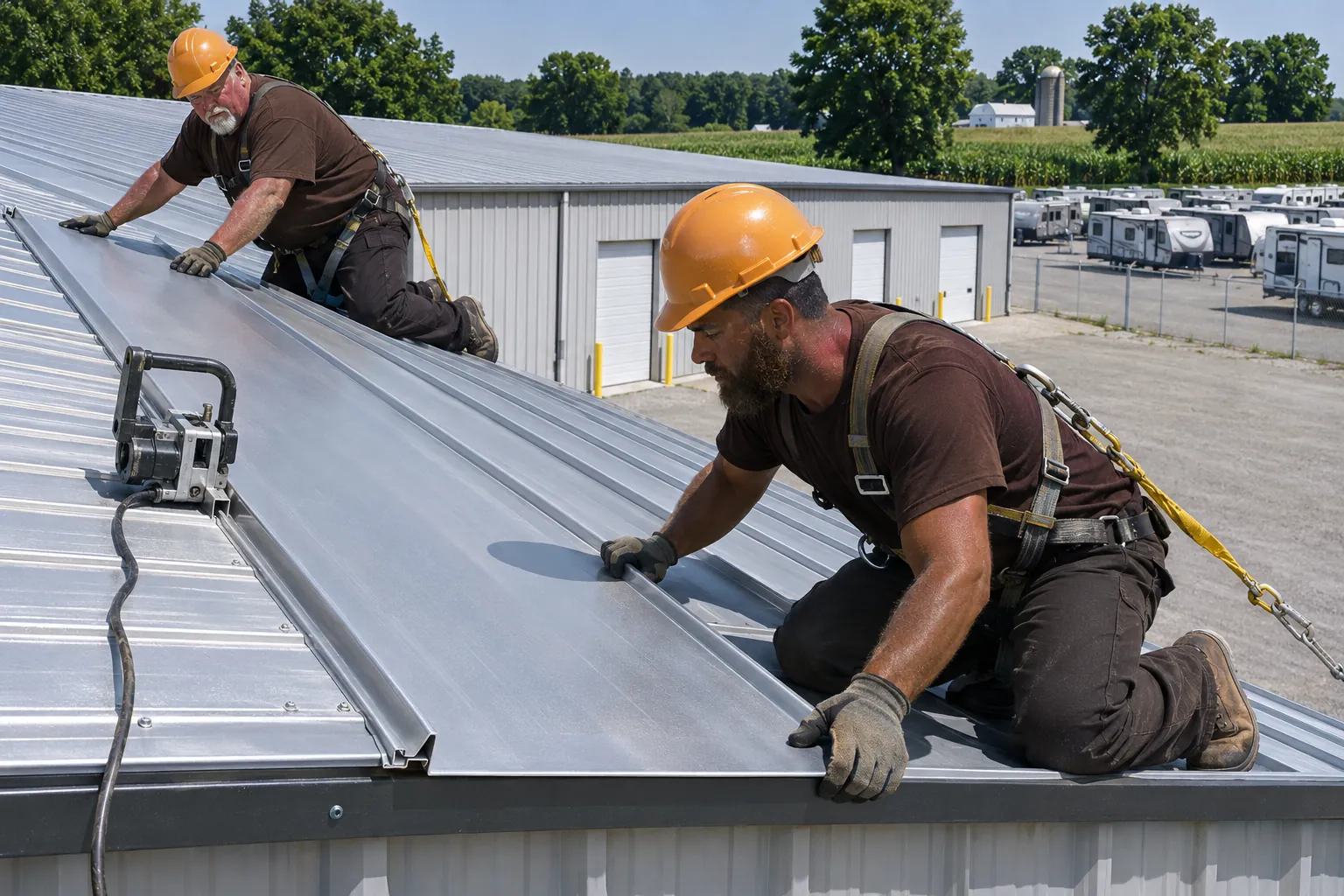
Industrial Roofing detailsPole buildings, shops, and flat roofs that need slope, using standing-seam or exposed-fastener panels sized for county snow loads. Gutters are sized for each roof.
Commercial Metal Roofing detailsWhen core cuts show wet insulation or the deck has rusted through, a recover is off the table and the roof comes off.
Full replacement strips the old membrane, insulation, and cover board down to the steel or wood deck. We replace rusted deck sheets, add insulation to meet the energy code in effect, then install the new TPO, EPDM, or metal roof with fresh flashing at every edge and curb.
Tear-off runs in sections sized to what the crew can dry in by nightfall, so the building below stays covered while production or tenants carry on.
Building type, slope, and what sits on the roof narrow the choice fast. Here is how the four services line up.
| Compare | TPO | EPDM | Industrial | Metal |
|---|---|---|---|---|
| Roof shape | Flat to low slope | Flat to low slope | Any large low-slope plant roof | Pitched, or framed over flat |
| Seam method | Hot-air weld | Primer and tape | Welded or taped, plus pads | Standing seam or lapped panel |
| Rooftop gear | Units and drains | Units, parapets, drains | Stacks, fans, heavy curbs | Few penetrations preferred |
| Fits buildings like | Warehouses, retail | Schools, offices, plants | RV and instrument plants | Shops, pole buildings |
| Seen from inside | Ceiling tile stains near drains | Stains along walls and boots | Drips over lines and stacks | Rust or drips at fastener rows |
| Upkeep | Probe welds, clear drains twice a year | Check taped laps and boots each spring | Walk pads and stack collars after service | Check screws, sealant, and gutters |
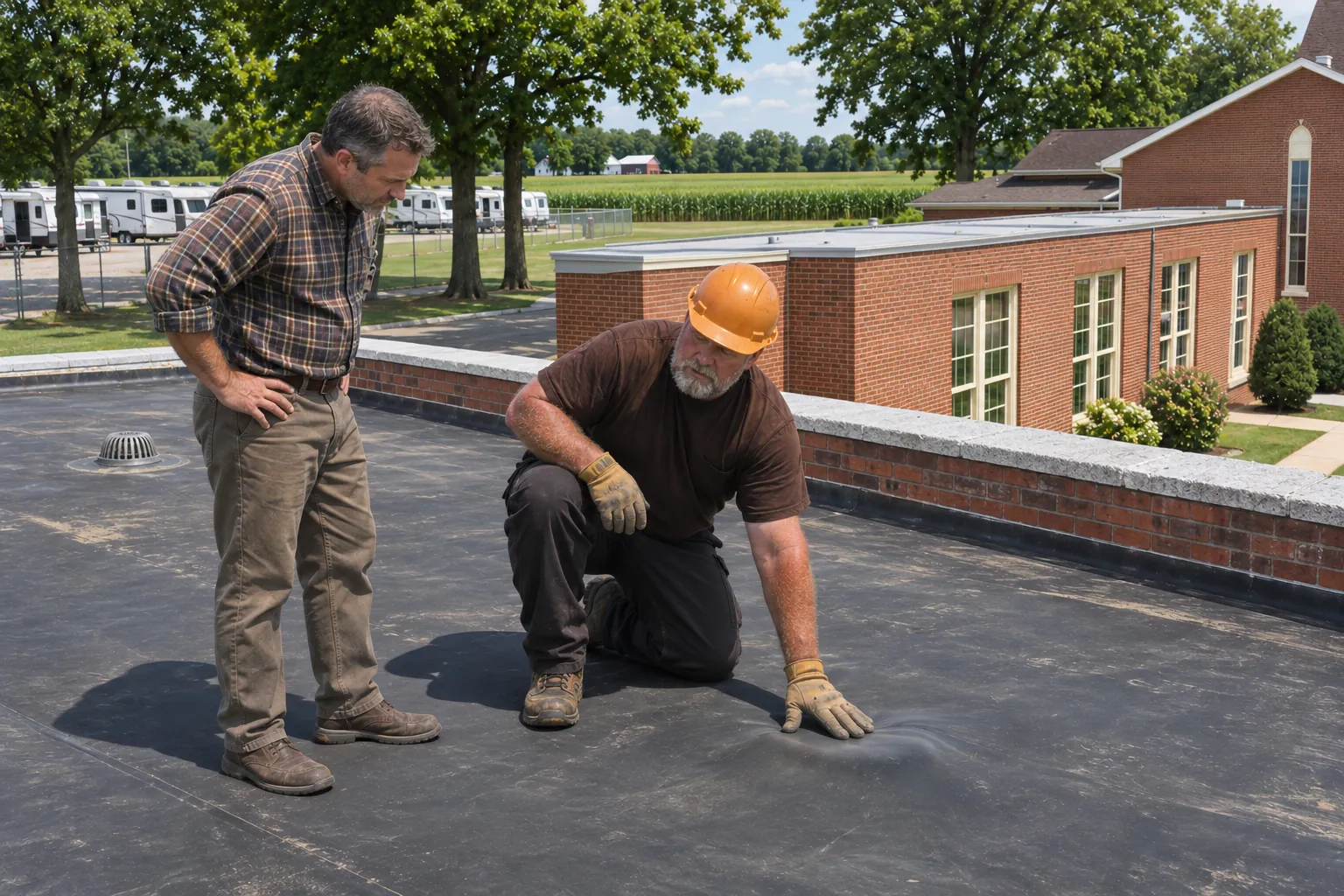
Many owners only know the roof leaks. A roof walk and one core cut tell us the membrane, the insulation, and the deck.
Or call (574) 384-0850
Whatever the system, the job runs in the same five steps so you know what happens next.
We measure each roof area, map drains and curbs, and pull a core to see how many layers sit over the deck. Drains, curbs, and walls are marked on a roof plan.
The membrane or panel is picked from slope, rooftop equipment, and what the building does below, then written into the scope. Each choice is explained in plain terms.
Before membrane or insulation is ordered, the City of Elkhart Permit Center or the town office for your address is asked what the reroof needs. Any inspection dates go on the schedule.
Each roof section is torn off, dried in, and sealed before the crew leaves, with dock lanes and fire exits kept open below. Nothing stays open overnight.
Seams, curbs, and drains are checked with you on the roof, and debris leaves with the last load. You get the roof plan, the core results, and the as-built notes.
Both. Commercial roof replacement is part of every system we install: the old roof comes off, the deck is checked and repaired, and the new TPO, EPDM, or metal roof goes on. Where the old roof is dry and well attached, a recover over it is another option we price.
Yes. A plant might carry TPO over the office wing and metal over a shop bay, or EPDM on a low roof beside a newer high roof. We flash the joint where the two systems meet so meltwater stays out of that line.
Core cuts and moisture readings decide it. Dry, firmly attached layers can take a recover where code allows another layer, and wet or crushed insulation means a tear-off down to the deck.
Usually, yes. When the roof comes off, insulation is brought up to what the Indiana energy code calls for, and tapered boards can be added near drains to move water off flat spots.
It runs on roof size, layers, and weather. Crews remove and replace only what they can dry in each day, so a large warehouse moves in sections across several weeks while the building stays covered every night.
In nearly every case. Tear-off stays above the deck, debris is lowered in bags or chutes, and work near docks, entrances, and air intakes is timed with you. Rooms that need quiet or clean air get scheduled windows.
Rusted or rotted deck sections found during tear-off are cut out and replaced before insulation goes down. The scope lists a per-sheet deck price so those repairs are known before the job starts.
We do. Abandoned curbs, dead vents, and old pitch pans are removed and the deck under them patched, so the new membrane runs across fewer openings that could leak later.
Tell us the building type and roof size. We will set a roof walk and send a written scope after it.