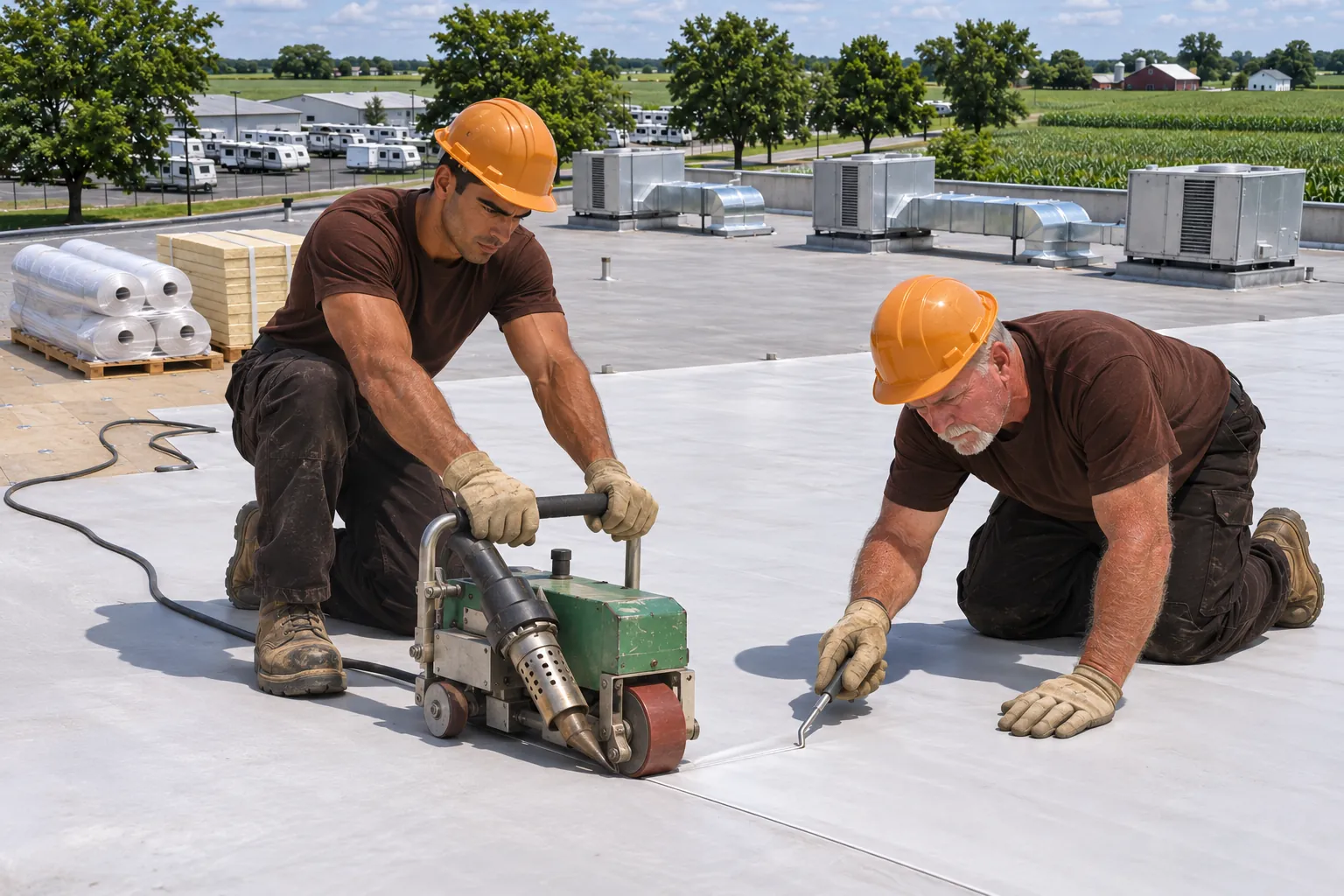
Glued Laps
Older rubber roofs used liquid splice adhesive that dries out with age. Those laps lift at the edges, and water wicks back under them. Cleaning, priming, and taping those laps stops the wicking.

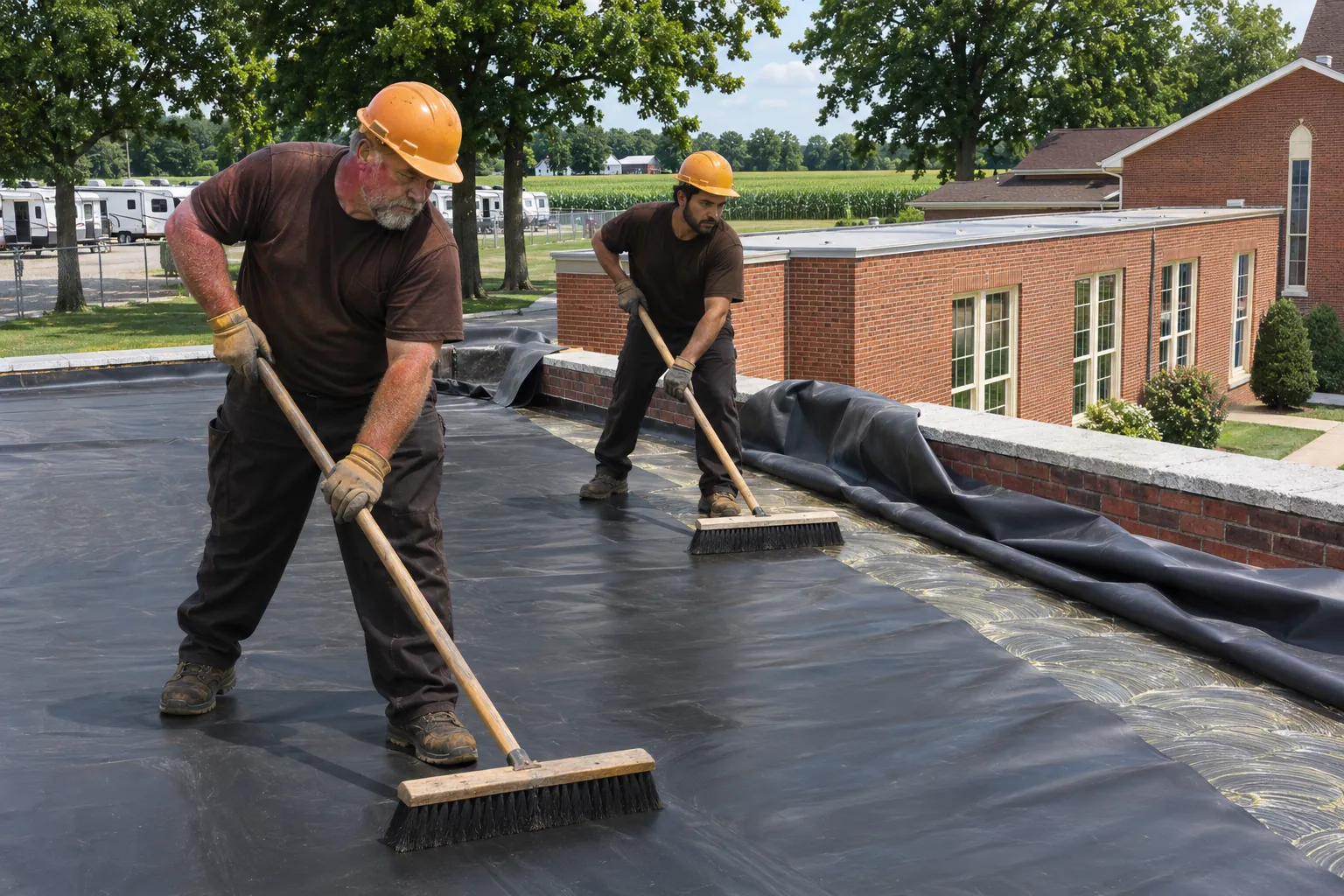
Our Elkhart EPDM roofing work puts wide rubber sheets on older plants, schools, and offices, with every lap primed and taped.
Elkhart EPDM roofing suits many flat roofs with walls and older decks. Here is where it fits and where we check first.
| Check | Good Fit | Look Closer First |
|---|---|---|
| Roof shape | Flat roofs ringed by parapet walls | Steep sections or many small levels |
| Existing roof | Old EPDM with glued seams failing | Wet insulation under the old sheet |
| Attachment | Fully adhered, fastened, or ballasted | Ballast on a deck that cannot carry it |
| Building use | Schools, offices, older plants | Oily exhaust venting onto the sheet |
| Weather | Cold days with dry decks | Adhesive work below its rated temperature |
Rubber holds up in the cold. Its seams, edges, and flashings are where water finds a way in, zone by zone.
Older rubber roofs used liquid splice adhesive that dries out with age. Those laps lift at the edges, and water wicks back under them. Cleaning, priming, and taping those laps stops the wicking.
Rubber shrinks slowly over the years and pulls at wall flashing, a tension that shows as bridging at the base of each parapet. New flashing set without tension relieves the pull at each wall.
Ice holds meltwater at drains each winter. Water then freezes in any small gap at the clamping ring and widens it. Tapered boards and a new clamping ring keep water moving.
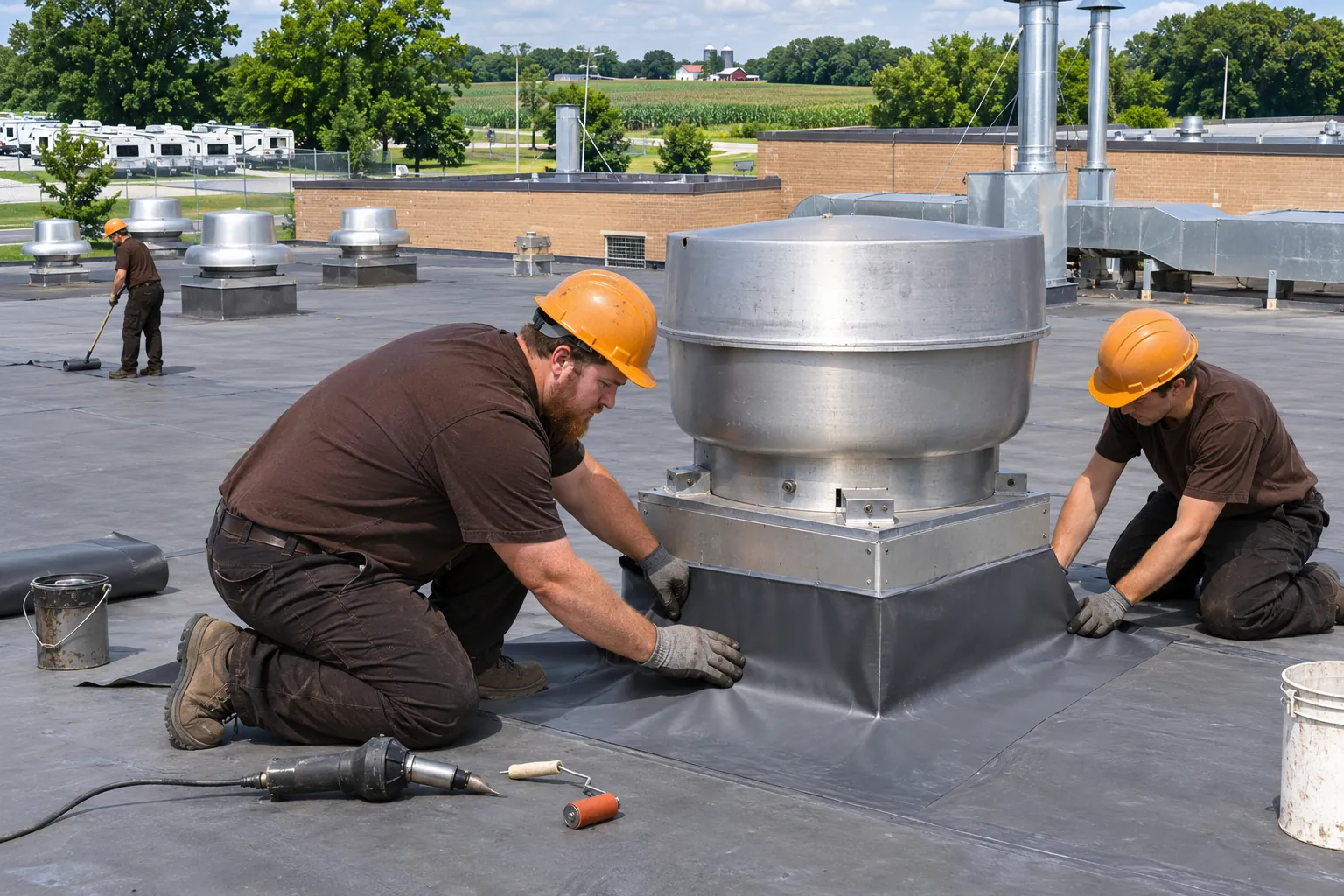
Pipe boots and curb flashing in rubber crack where the sheet bends tightest, often at the corners of units and vents. Molded boots replace field-cut pieces at each opening.
A black sheet hides wet boards below it. Soft spots underfoot near drains and walls point to water in the insulation. Cores at those soft spots measure how far the water spread.
How the sheet is held down shapes the price, the weight, and how the roof handles wind.
Bonding adhesive glues the rubber to insulation or cover board. The surface stays flat and quiet in wind gusts.
Plates and screws in the laps hold the sheet to the deck, a method that keeps working on cooler days.
Loose-laid rubber held by stone, used only where the deck and structure are rated for the added weight.
On a rubber roof worth keeping, old glued laps are cleaned, primed, and covered with seam tape and cover strips.
Here is what owners see on a tired rubber roof and what a new one brings.
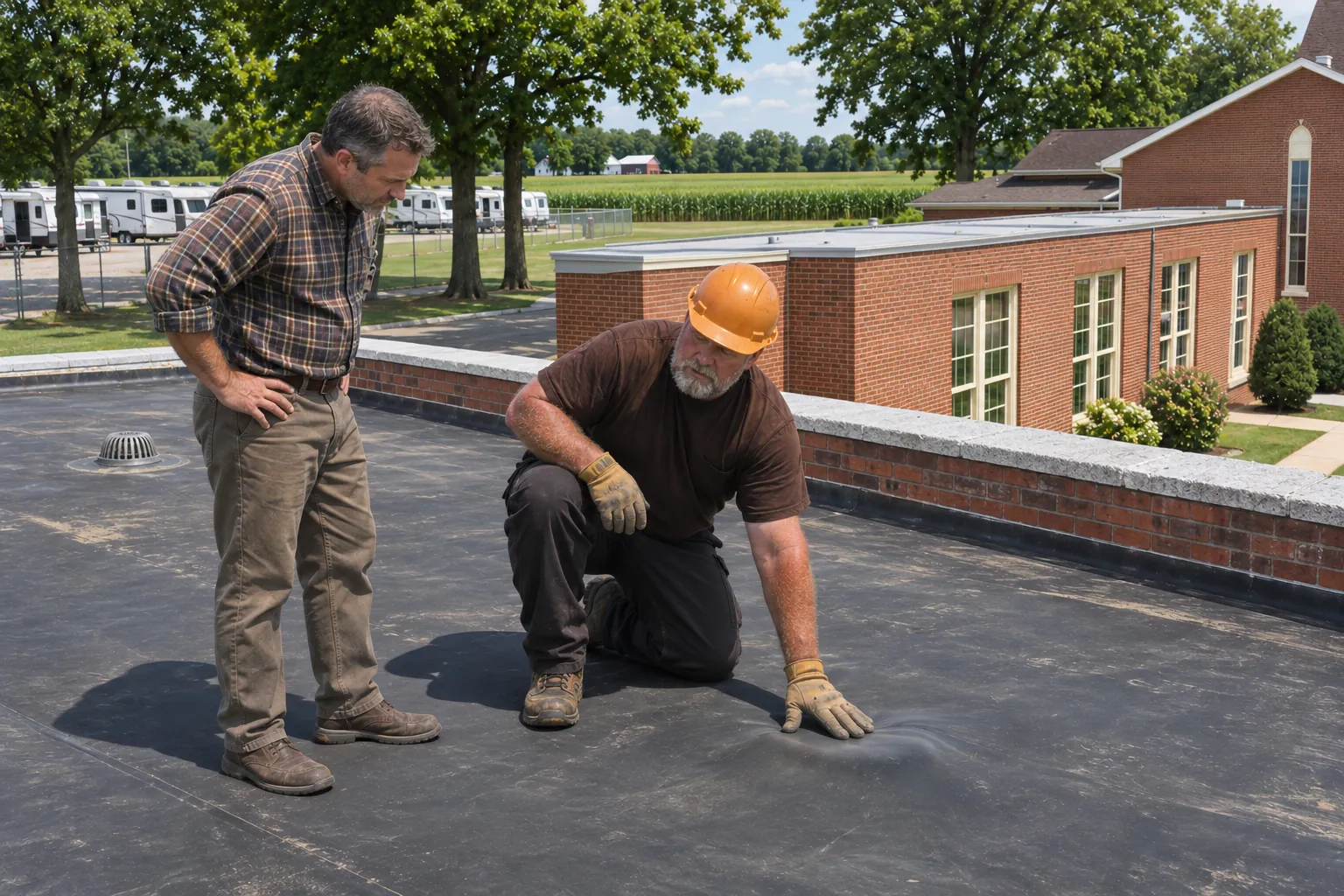
Bridging at parapets means the sheet has shrunk. We check whether new flashing holds it or the roof is due for new rubber.
Or call (574) 384-0850
Four steps for each section of rubber, from the core cut to the last strip of seam tape.
Seams are probed, wet spots marked, and cores taken so the scope says whether the rubber stays or goes.
Boards go down to the thickness the energy code calls for, with tapered pieces built up around drains.
Wide sheets are relaxed in the sun, then adhered or fastened so laps fall away from drains and corners.
Laps are cleaned, primed, and taped, cover strips go on, and parapets, boots, and curbs get new flashing.
Every taped lap is checked by hand, drains are flushed, and we walk the new rubber roof with your maintenance lead before the crew leaves.
Not every flat roof should stay rubber. These rows show when another system fits.
Long warehouse roofs in full sun often go to TPO, whose white surface and welded seams suit wide open fields with few walls.
TPO RoofingRubber roofs over fabrication bays get extra pads and curb flashing where maintenance crews and carts cross the roof every week.
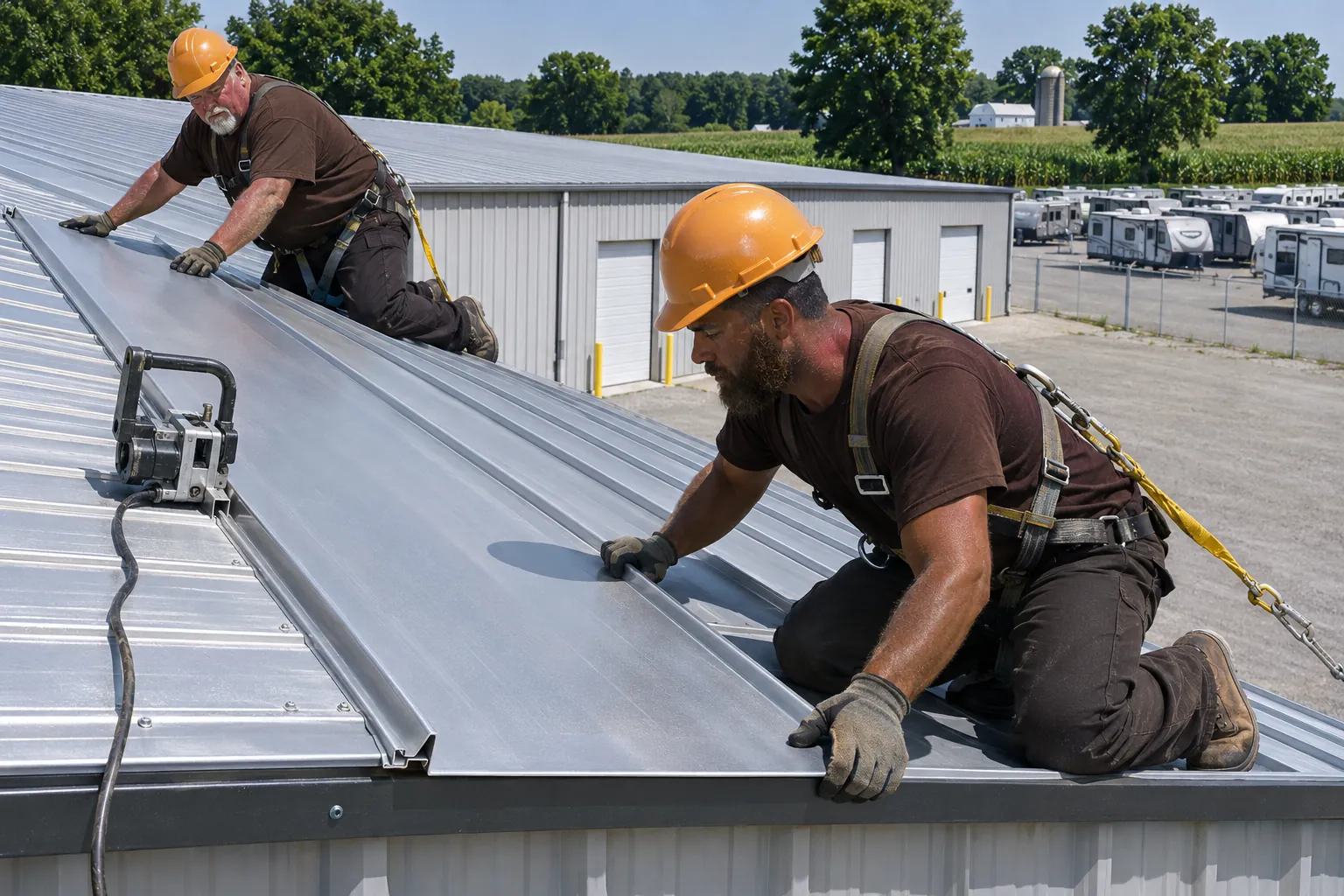
Industrial RoofingLow roofs that keep ponding behind parapets can be framed up and covered in standing-seam panels instead of new rubber.
Commercial Metal RoofingEPDM is a black synthetic rubber sheet made in wide rolls, so a roof carries fewer seams. Laps are joined with primer and tape. It stays flexible in deep cold, which is why so many older plants, schools, and offices in northern Indiana already have it.
Area, sheet thickness, insulation, and the attachment method lead the list, followed by tear-off. Parapets, curbs, and penetrations add flashing labor, and tall buildings add crane or lift time. We set the price after the roof walk and core cuts.
Each failing lap is cleaned with EPDM cleaner, both faces are primed, and new seam tape goes on with a cover strip over it. Lap sealant finishes the edges. If shrinkage has pulled the lap apart, new rubber is added before taping.
Cold barely affects the rubber sheet, which bends instead of cracking. Trouble starts at seams, flashings, and drains, where meltwater freezes in small gaps and pries them wider each cycle. Tight laps, clear drains, and a spring roof walk keep winter from opening the roof.
Often, when the insulation under it is dry and the sheet still stretches without cracking. Failing glued laps are retaped, wall flashing is rebuilt, and boots are replaced. Wide wet areas or brittle rubber point to a new roof instead.
The National Weather Service has recorded Lake Michigan snow bands reaching Elkhart County. Drifts pile against parapets, so wall flashing runs higher, and drains get attention because ice holds meltwater on the sheet.
It can. The Fire Prevention and Building Safety Commission lists 675 IAC 19 as the energy code in effect for commercial buildings. We confirm with the building department what applies before insulation is ordered.
Send the address and what the rubber is doing. We probe the seams, core the roof, and write the scope.