Welded Laps
A cold weld looks closed but peels under a probe. We drag a seam probe along every lap, since one short gap lets water travel under the sheet.

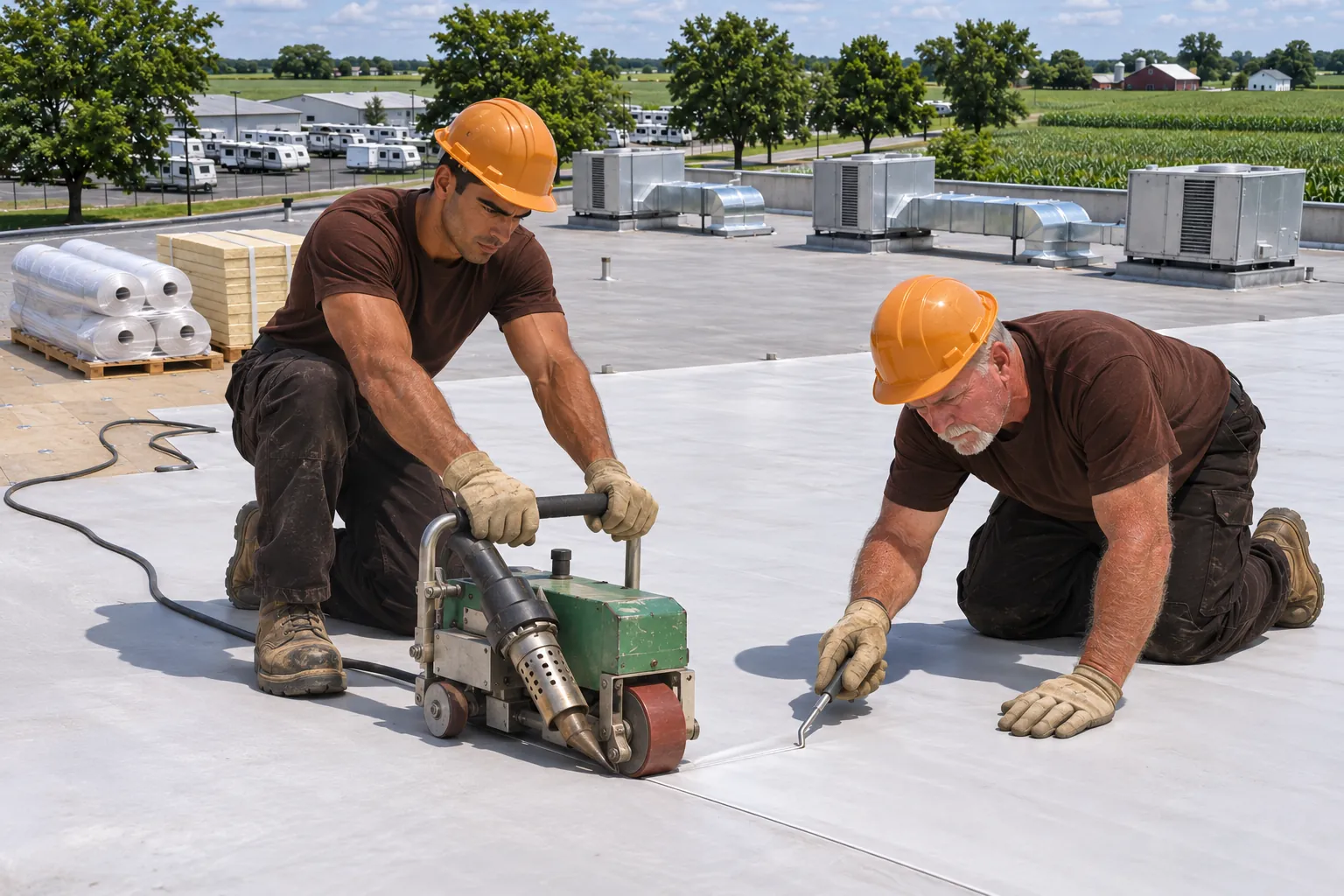
We install Elkhart TPO roofing on warehouses, retail strips, and light industrial buildings, welding every seam into one white sheet.
Elkhart TPO roofing fits a long list of low-slope buildings. These rows show where it fits right away and where we look closer first.
| Check | Good Fit | Look Closer First |
|---|---|---|
| Roof slope | Flat or low slope with drains in the field | Pitched sections over a quarter of the roof |
| Existing roof | One dry layer, firmly attached | Two layers already, or wet insulation |
| Rooftop gear | Units on curbs with room to flash | Grease or solvent exhaust onto the roof |
| Building use | Warehouse, retail, light industrial | Process exhaust that attacks the sheet |
| Season | Spring through fall, or dry winter days | Frost or snow sitting on the deck |
A TPO roof fails at its details long before the field wears out. These five zones get the closest look on a roof walk.
A cold weld looks closed but peels under a probe. We drag a seam probe along every lap, since one short gap lets water travel under the sheet.
Membrane runs up each parapet and is held by a termination bar. Snow drifts against those walls, so the bar and sealant line take a beating every thaw.
Clamping rings hold the sheet at each drain bowl. Ponding rings around a drain mean the insulation sagged or the ring slipped.
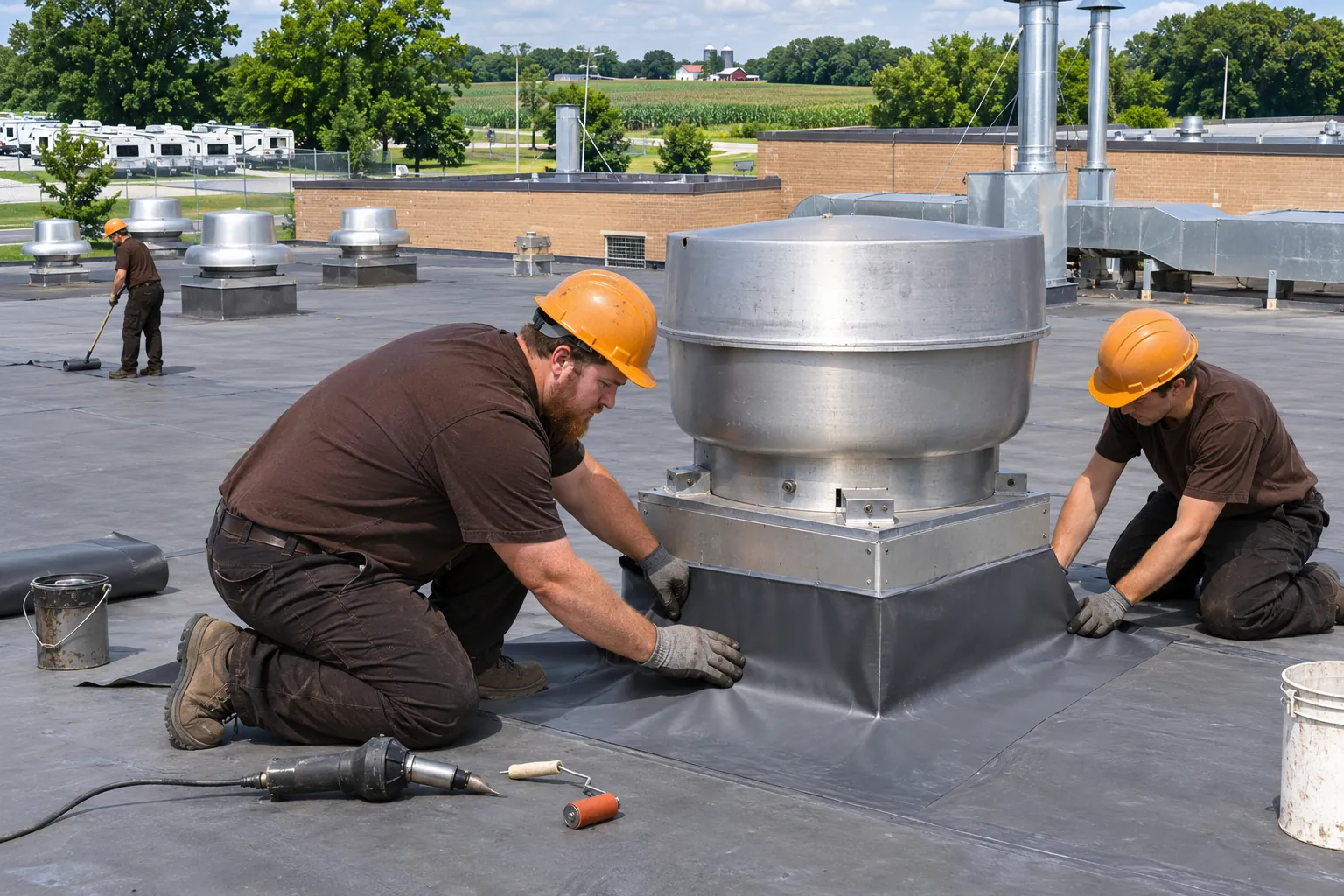
Prefabricated corners and welded curb wraps keep water out where rooftop units sit. Cracks start at the corners after years of service traffic.
HVAC techs wear a line from the hatch to each unit. Welded walkway pads along that path keep boots and dropped tools off the membrane.
The membrane is one choice. Thickness, attachment, and what goes under it shape how the roof performs.
Thicker sheets give more material over fasteners and more room for future welding repairs, which matters on roofs with heavy foot traffic.
Plates and screws through the insulation into the deck, with welds covering each row. Common on steel decks and in cold months.
Bonding adhesive holds the membrane to a cover board for a smooth roof surface with no flutter in wind. Adhesives need warmer days to cure.
Sloped boards around drains move water off flat spots, so the new roof drains even where the deck never did.
Owners usually call about one leak. The new roof answers more than that.
Seams that peel by hand often mean the sheet has aged past welding. We probe them and tell you whether repair or replacement fits.
Or call (574) 384-0850
A TPO job runs in four steps, and each section is welded and closed before the crew opens the next one.
A core cut shows the layers and whether the insulation is dry. Measurements set sheet layout so laps fall away from drains.
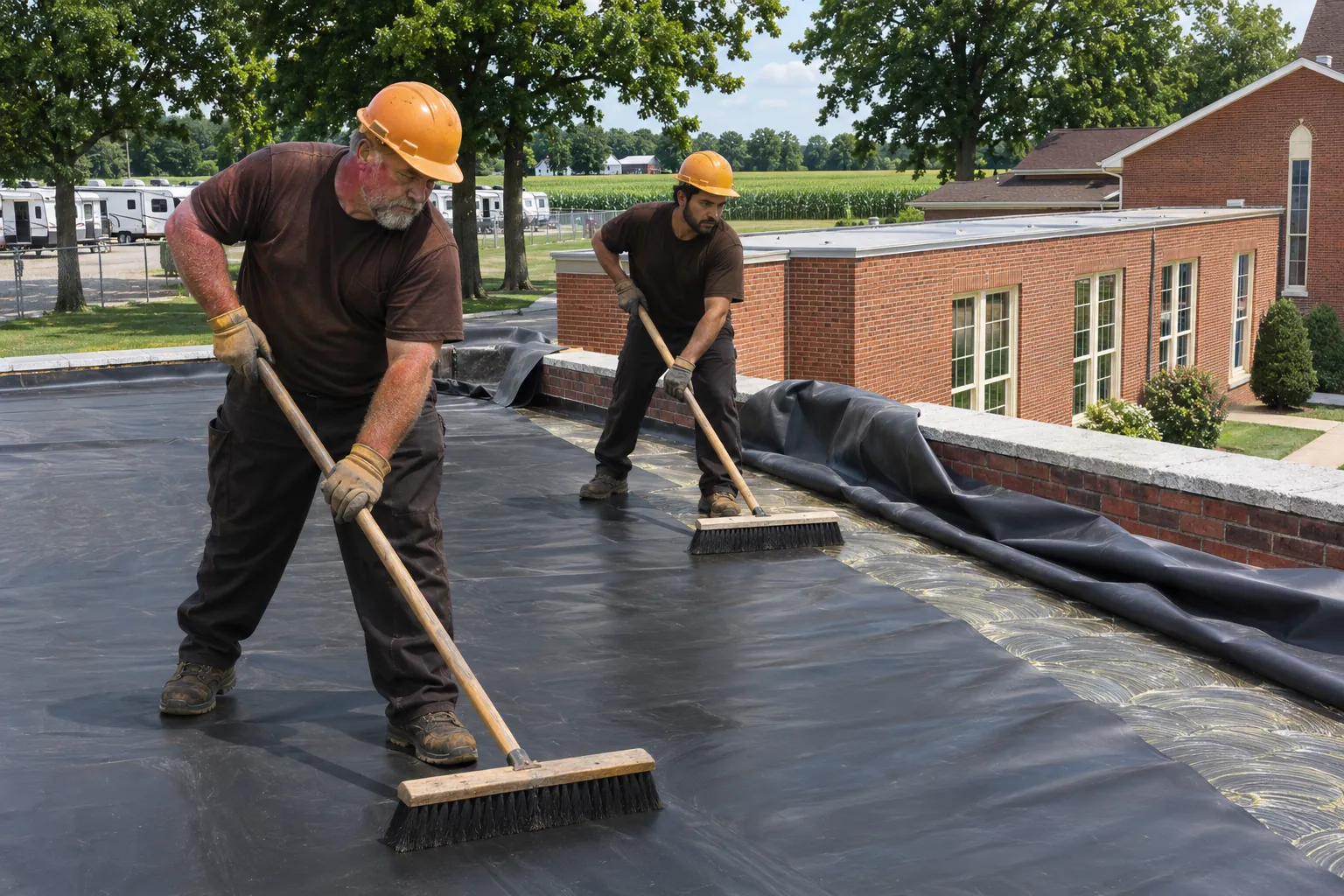
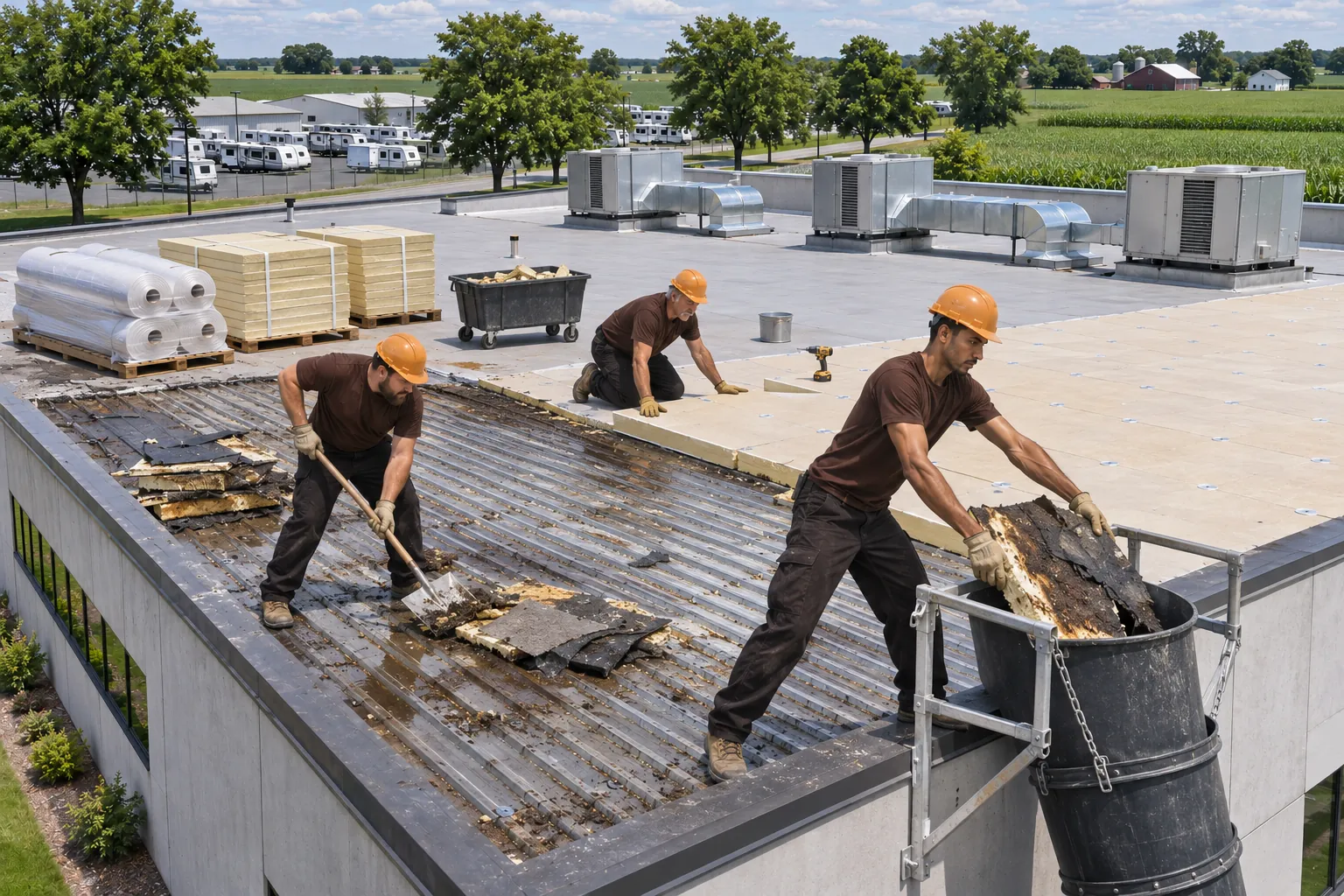
Old layers come off or get a cover board, and any rusted deck sheet is cut out and replaced before insulation goes down.
Insulation is fastened, the sheet unrolled, and each lap welded with an automatic welder, with corners finished by hand.
Curbs, drains, and walls get flashed, then every seam is probed and test cuts confirm the weld width.
Before the crew leaves, we walk the finished TPO roof with you, point out the drains, curbs, and pad paths, and hand over the seam and test-cut notes.
Some buildings fit another system better. Each row says why.
Owners weighing a white sheet against black rubber should compare seam methods: taped EPDM laps handle a roof full of parapets and odd corners.
EPDM RoofingPlants with exhaust stacks and grease or solvent venting need the membrane checked against what comes out of each fan before TPO is picked.
Industrial RoofingBuildings with flat spots that never drain can trade a membrane for metal panels on framing that adds slope toward gutters.
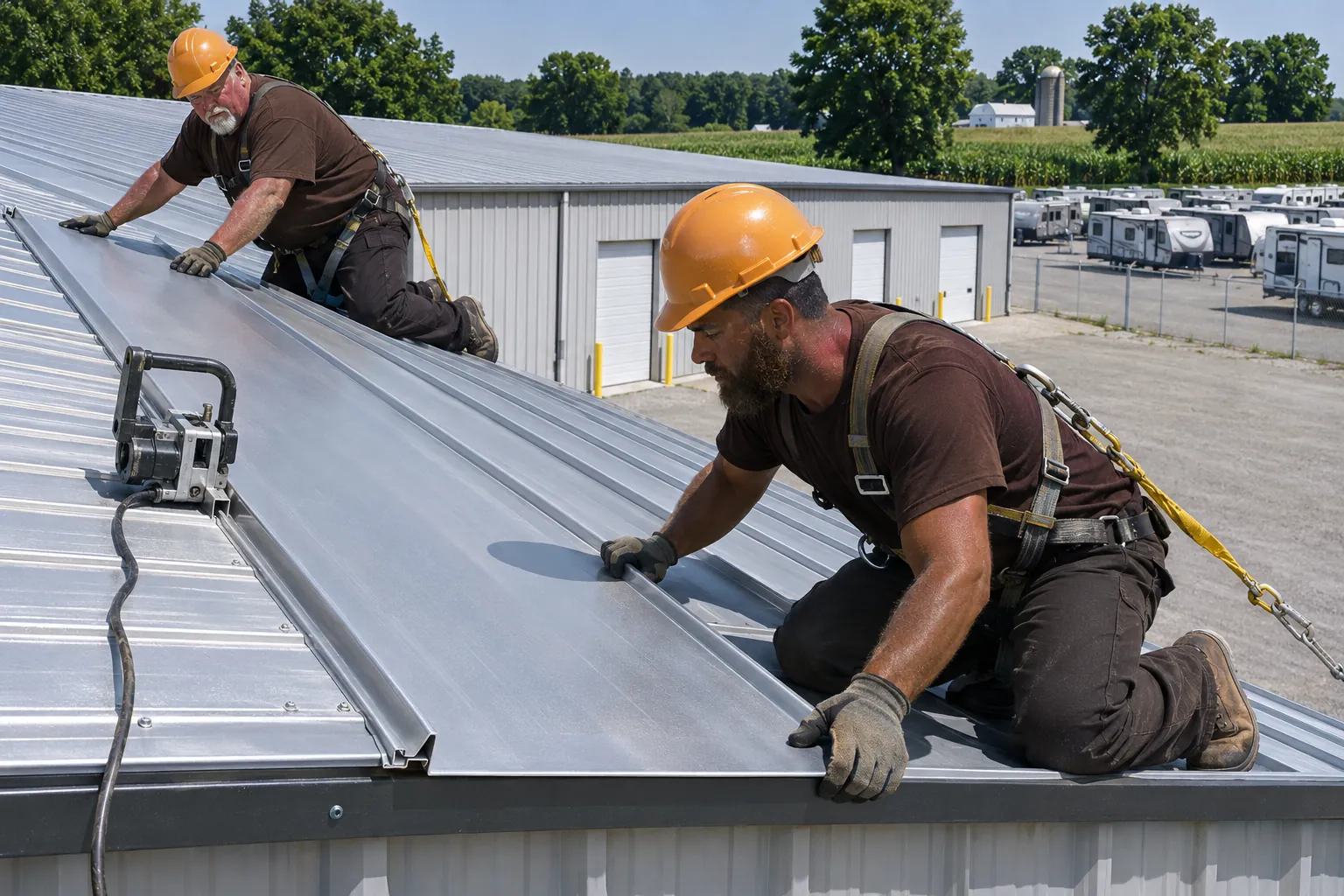
Commercial Metal RoofingTPO is a white thermoplastic single-ply sheet laid over insulation on flat and low-slope roofs. Hot air fuses the laps into one membrane. Around Elkhart it shows up most on warehouses, light industrial buildings, and retail strips, where the white surface helps with summer heat.
Roof area, sheet thickness, insulation, attachment, and tear-off set most of the price. Drains, curbs, units, parapets, and edge metal add detail work. We price it after measuring the roof and checking the deck and insulation with core cuts.
Sometimes. A recover works when the old roof is dry, firmly attached, and the code allows one more layer. Wet insulation comes out first, since sealing it in traps moisture. The local building department confirms whether a recover is allowed on your building.
Seldom. Welded laps use heat from the welder, so cool days are fine for the seams. Cold slows adhesives and stiffens the sheet, so crews adjust welder speed and use mechanical attachment or low-temperature adhesive. Frost or snow on the deck stops work until it dries.
Indiana's commercial code is 675 IAC 13, and the Fire Prevention and Building Safety Commission lists the 2014 Indiana Building Code as in effect, with insulation rules under 675 IAC 19. The local building department enforces both on a reroof.
Roofs with weekly service traffic or many units do better with a thicker sheet, which leaves more material over fasteners and more room for later weld repairs. Lightly used warehouse fields can take a standard thickness, and the scope names the choice for each roof area.
Send the address and roof size. We core the roof, check the deck, and write the TPO scope.