Hatch Landings
Every trip starts at the roof hatch or ladder. The membrane at the landing scuffs, punctures, and lifts at the hatch curb flashing. A heavier landing pad and new hatch curb flashing fix that spot.

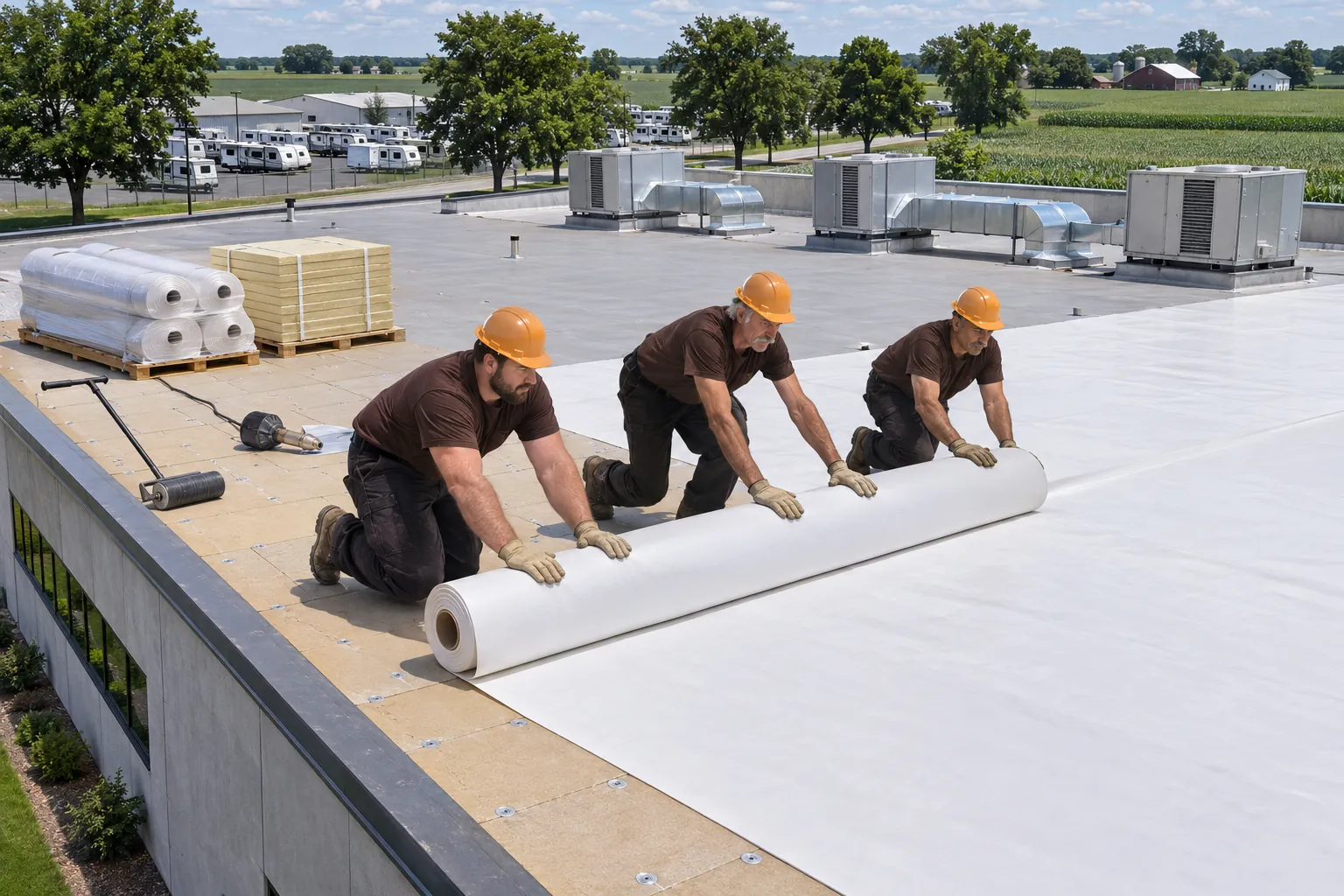
Angola commercial roofing on industrial buildings is planned around the people and carts that cross the roof to service units and stacks.
Angola commercial roofing on plants has to hold up to weekly foot traffic as well as snow, sun, and rain.
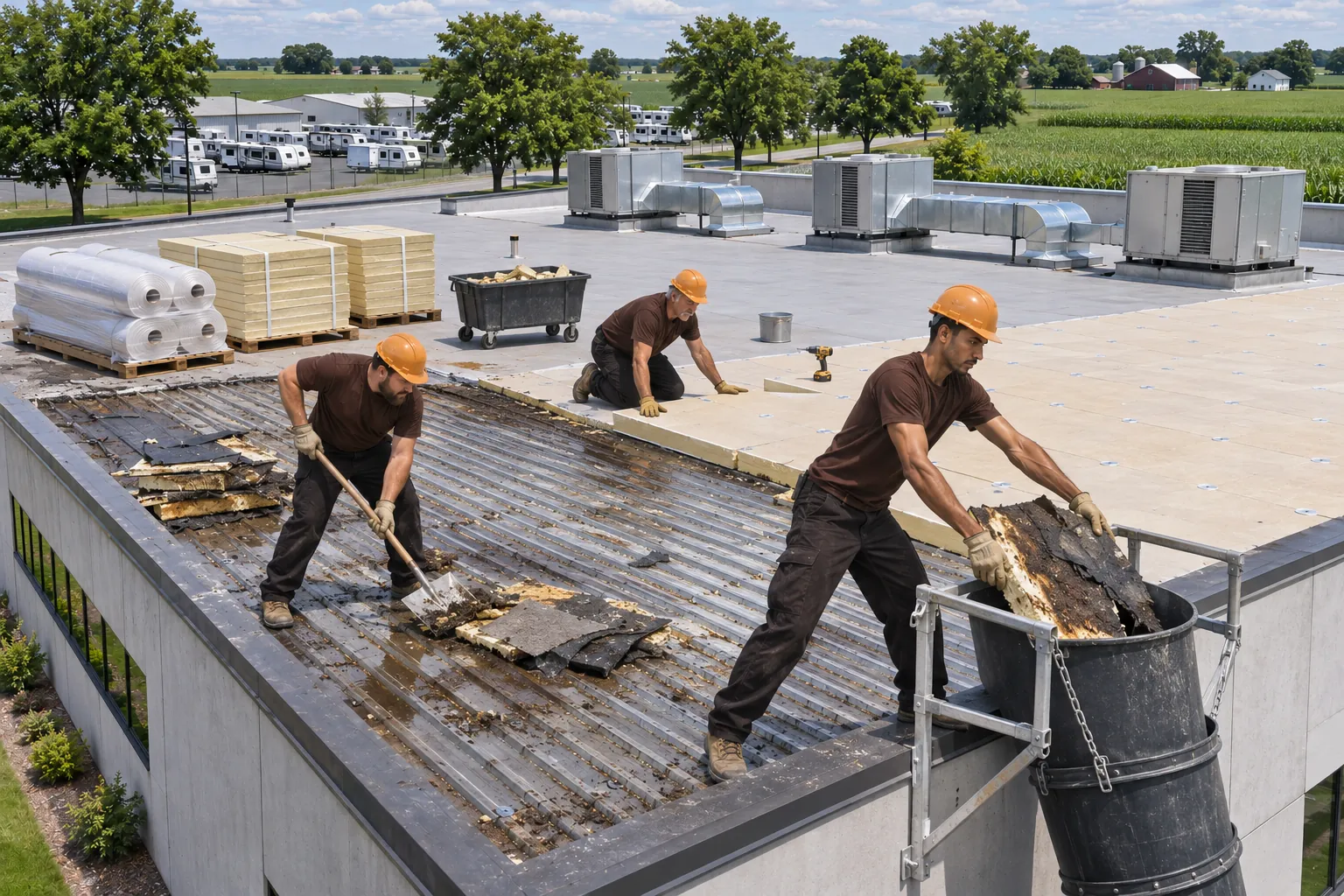
On many plant roofs, maintenance crews reach fans, filters, and units every week. Their routes show as worn, scuffed lanes in the membrane between the hatch and each piece of equipment.
We map those routes on the roof walk, then lay walkway pads along them and reinforce the flashing at each curb and stack the crews work around.
Traffic wear looks different from weather wear. These five zones show it first.
Every trip starts at the roof hatch or ladder. The membrane at the landing scuffs, punctures, and lifts at the hatch curb flashing. A heavier landing pad and new hatch curb flashing fix that spot.
Paths to units show as gray, thinned lanes in the sheet. Dropped screws and filter frames puncture them. Those lanes get cut out and patched before pads go down.
Techs kneel and set tools on curb flashing while working. Corners split and counterflashing bends out of place. Reinforced corners and new counterflashing hold up to that handling.
Stack collars near production heat dry out sealant and shrink membrane around the base. New collars with heat-rated sealant go on at each stack.
Old filters and packaging left on the roof wash into drains and clog strainers after storms. A short cleanup routine after service visits keeps strainers open.
Maintenance crews notice first, then the floor below stays dry. Here is what a traffic-ready roof changes on an Angola plant.
Traffic planning applies to every system. These rows show where each fits in Angola.
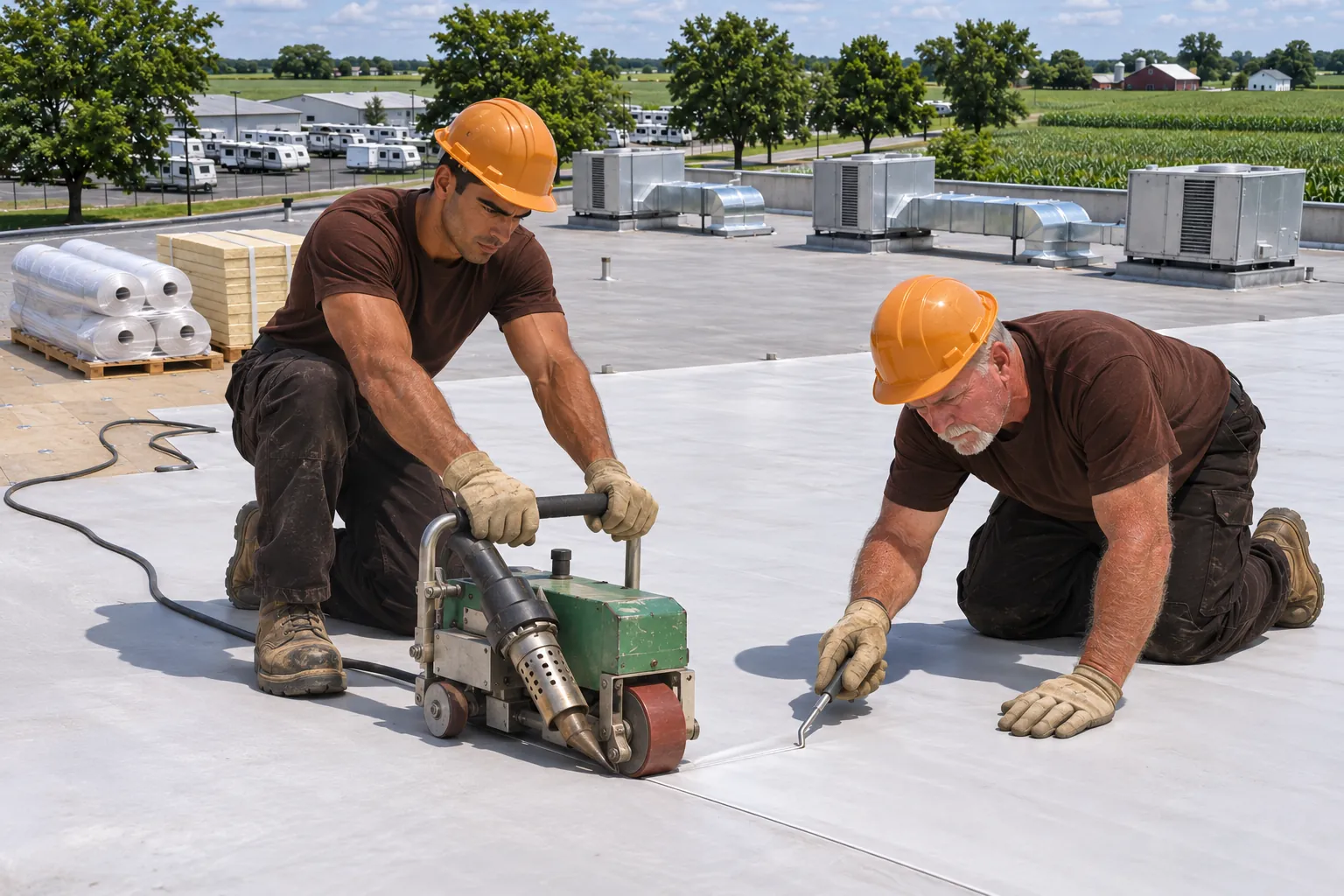
Welded pads bond straight to a TPO sheet, which makes it a strong match for roofs crossed weekly by crews. Spare pad stock can be left for future service areas.
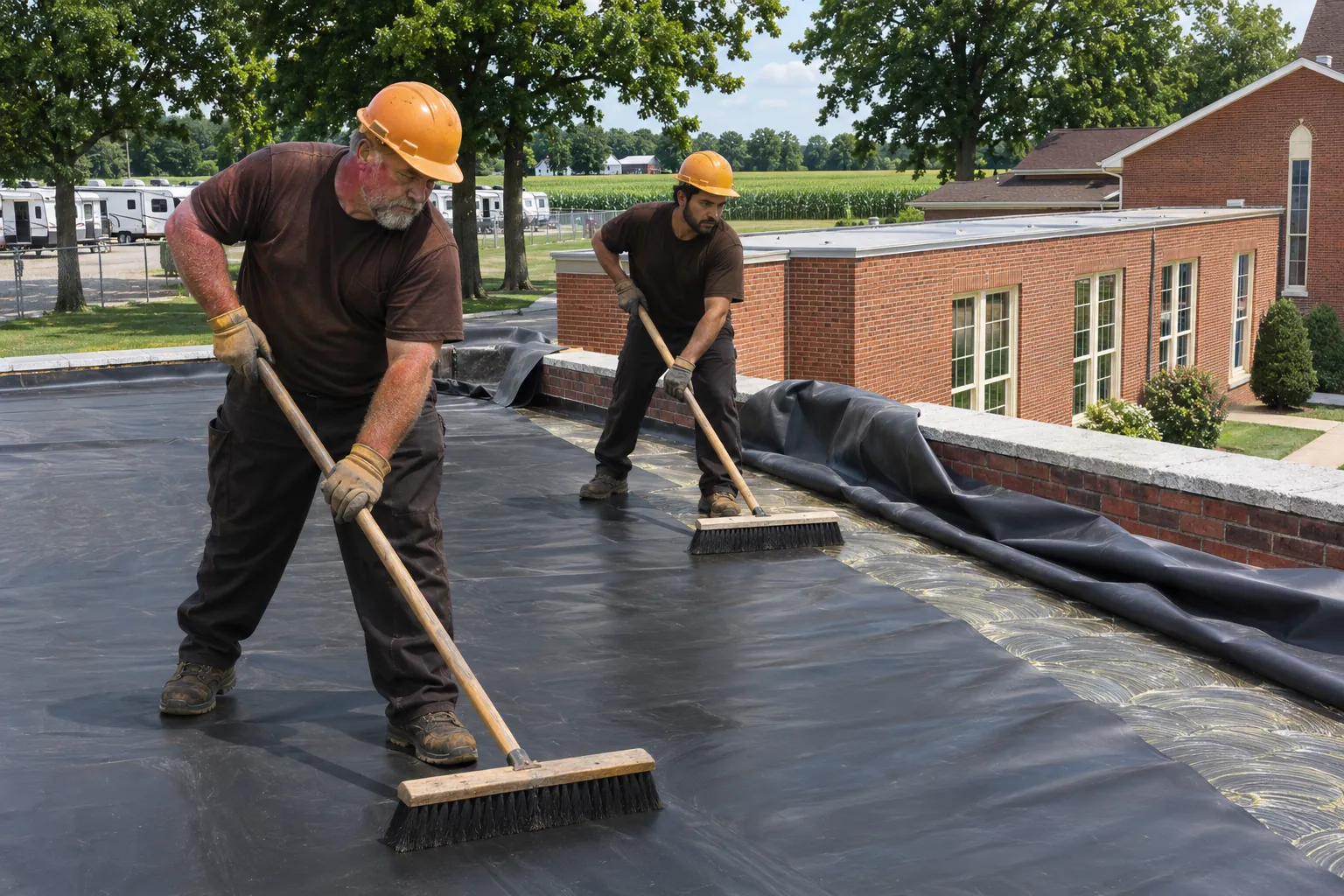
TPO Roofing detailsRubber roofs take adhered pads and stay flexible where carts and boots flex the sheet in cold weather. Taped laps along routes get an extra cover strip.
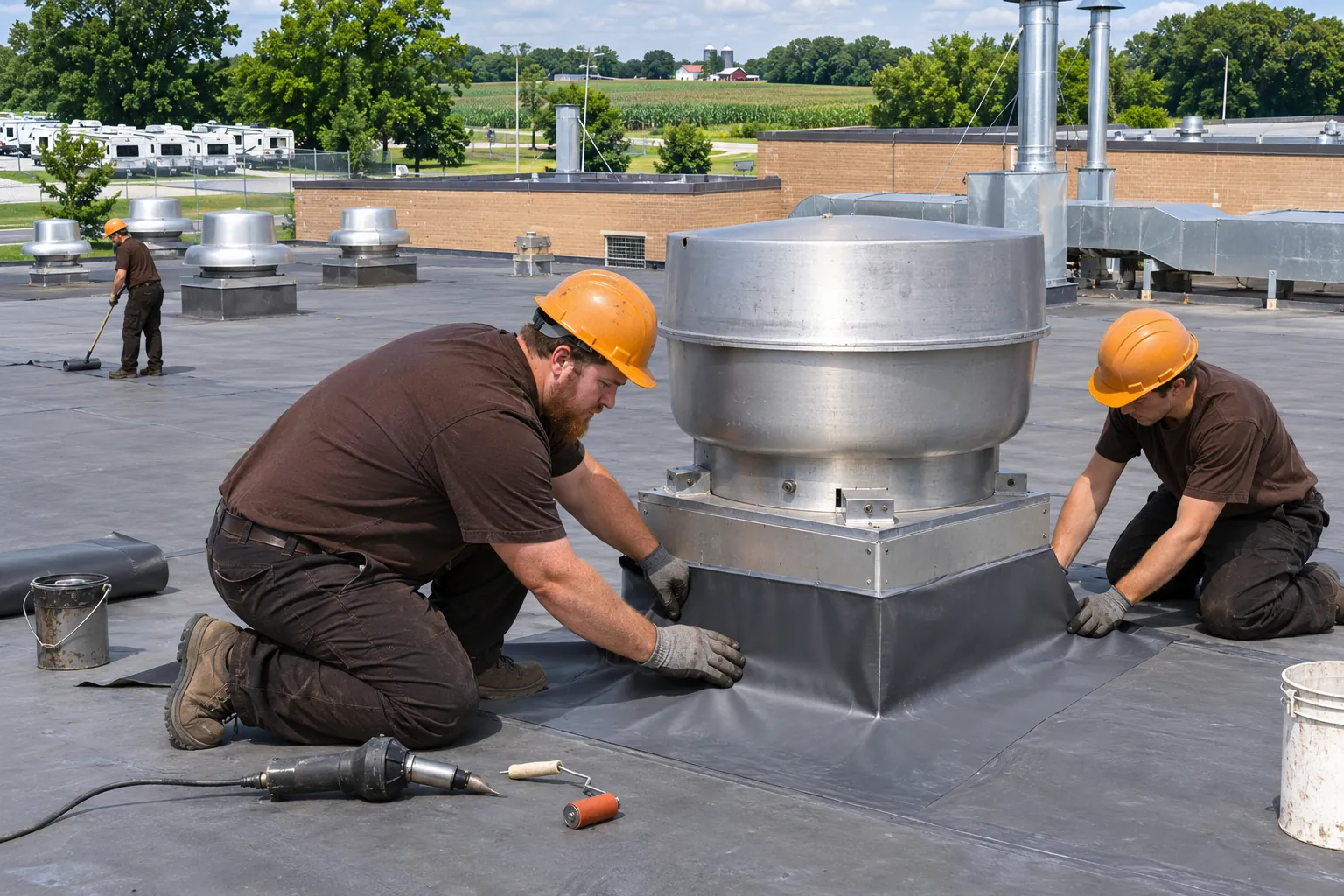
EPDM Roofing detailsPlants with many stacks and units get the full traffic plan, pads, and reinforced flashing. Stack collars and hatch landings get the heaviest detail.
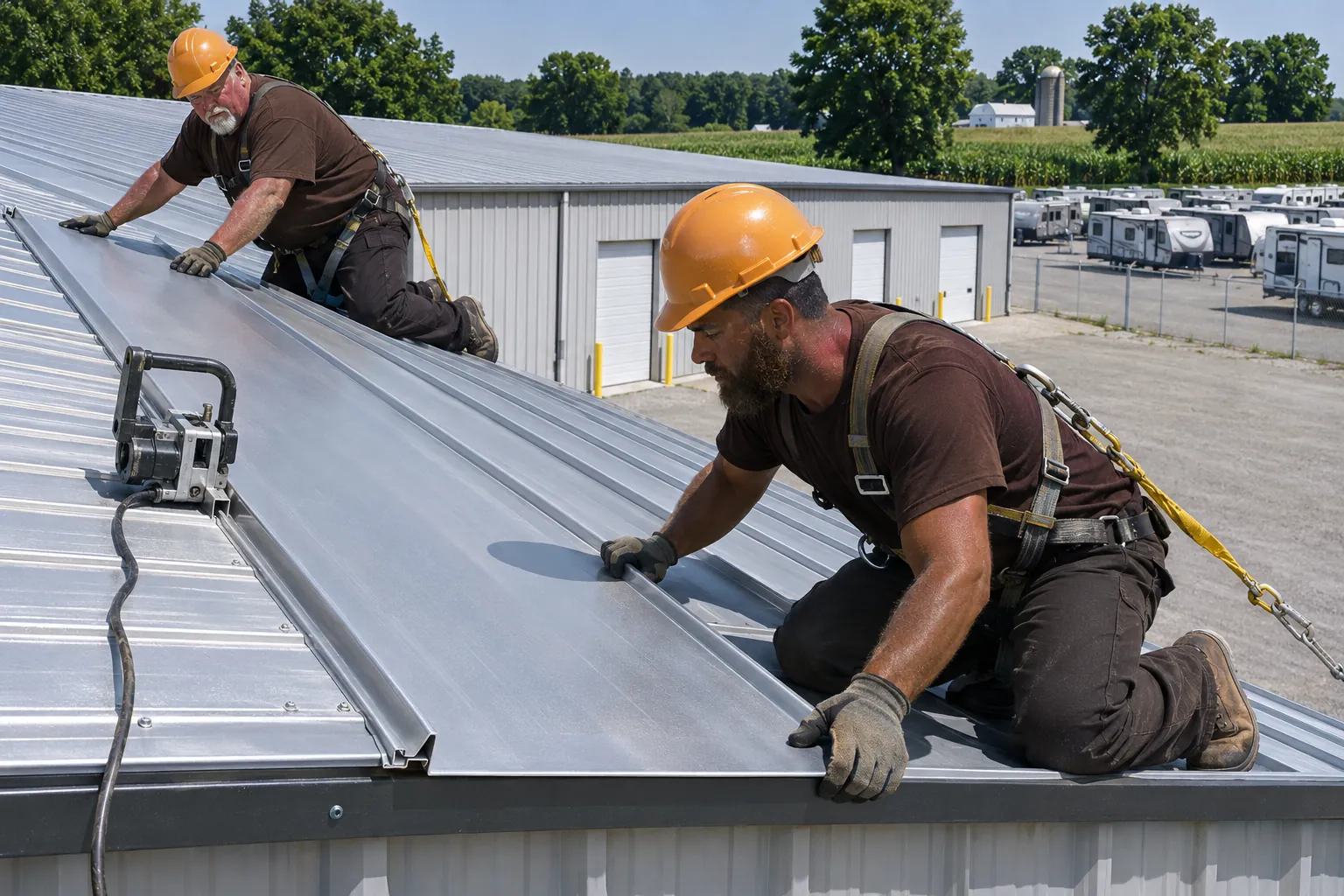
Industrial Roofing detailsMetal roofs get walkway systems that clamp to the seams, so crews never step on panel flats. Clamped walkways also keep boots off panel seams.
Commercial Metal Roofing details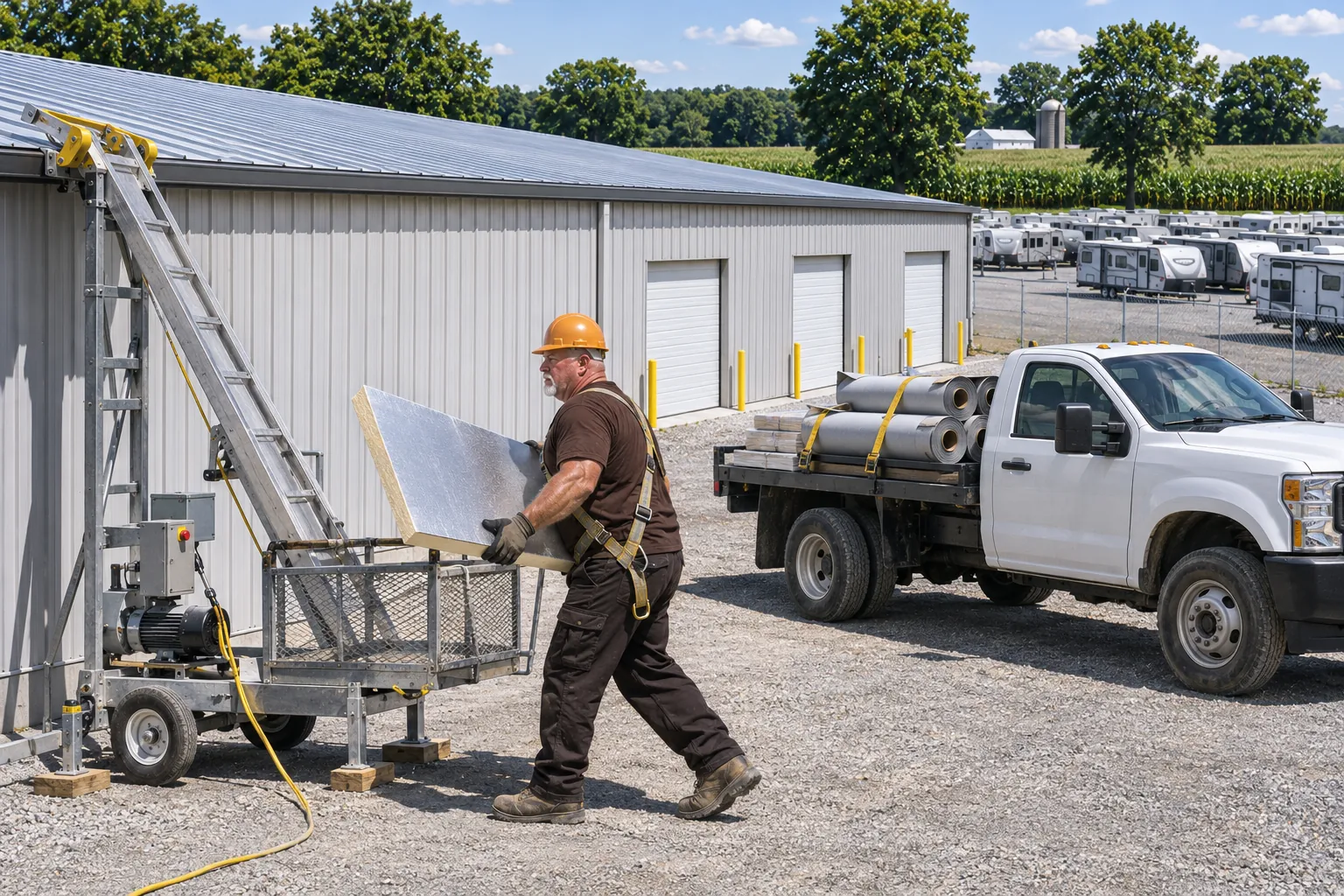
We map the routes they use and protect them, then reflash the curbs they work at most.
Or call (574) 384-0850
Four steps that plan the roof around the people who use it.
With your maintenance lead, we mark the hatch, each unit, and the paths crews take between them. Hatch, units, and stacks go on the roof plan.
Thinned and punctured sheet along the routes is cut out and patched or replaced. Thin lanes are replaced with new membrane.
Curbs and stacks crews work at get new flashing with reinforced corners and collars. The heaviest detail goes where techs kneel most.
Walkway pads go down on the membrane along each route, and the roof at the hatch landing gets its own protection. Pad sections leave gaps so water drains past.
We walk the finished roof with your maintenance lead and leave a short routine for clearing drains and checking pads after service visits. Your maintenance lead keeps a copy of the routine.
Angola joins five more towns on our list. Outside them? Call us or send us a message.
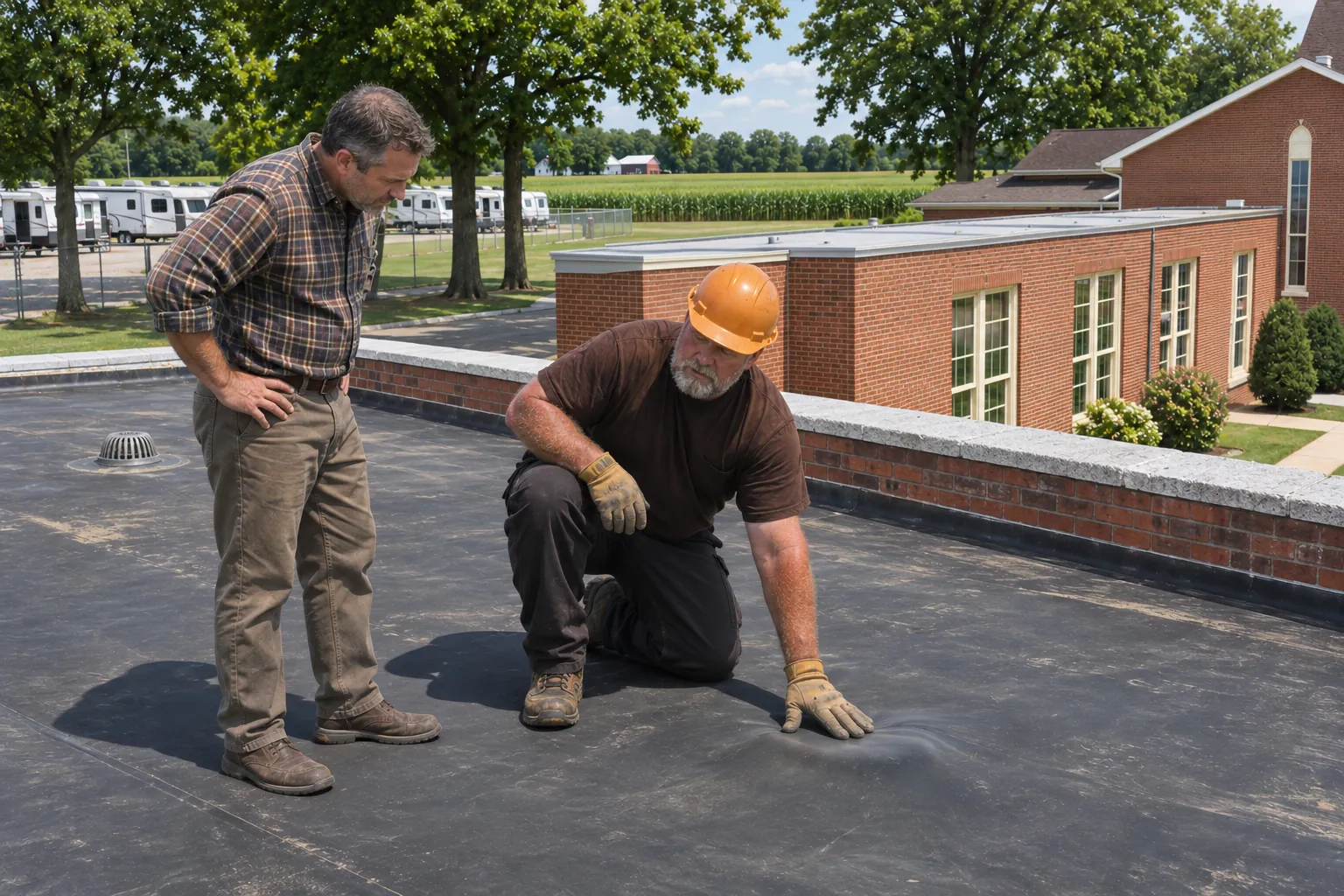
Home base: RV plants, instrument shops, warehouses, and offices.
Lots with several buildings, each roof priced on its own.
Manufacturing roofs replaced over clean, running production areas.
Older flat roofs converted to sloped metal on framing.
Warehouses and offices cored for wet insulation before bids.
Yes, Angola is in our service area. Industrial roofs there get systems chosen for their equipment, traffic, and drainage, with walkway pads and reinforced flashing around units and stacks where crews and equipment cause wear. Work is phased to keep production areas below protected.
Reinforced corners, new counterflashing, and enough height above the roof for snow and water. Curbs crews service often get the heaviest detail.
When the sheet is only worn or punctured along a path, it can. Damaged sections are cut out and patched, and pads keep it from happening again.
Each stack gets a collar and counterflashing sized for its heat, and the membrane around it is checked for shrinkage and residue before the new flashing goes on.
A walk each spring and fall, plus a quick look after any big equipment swap, catches punctures and loose flashing before water reaches the floor below.
Pads are light and sit in short sections with gaps between them, so water drains past them toward the drains. They are welded or adhered to match the membrane.
Dragging equipment, setting sharp parts on the sheet, and leaving screws or filters behind cause most traffic damage. Pads and a cleanup routine after each visit prevent nearly all of it.
Ask us and we will find out. Before work, we check with the building office covering your Angola address on permits and inspections for the job.
Send the plant address and a note on rooftop equipment. We walk the routes with your maintenance lead.